The pile of corrugated offcuts beside the die-cutter had grown waist-high again. A shift supervisor I spoke with last year at a folding carton plant put it bluntly: “We bought a stripper that worked beautifully during the demo. A month later, it was the bottleneck of the entire finishing department.” His team had made a mistake many converters make—they bought based on headline specifications and price, not on how the equipment would actually perform with their mix of substrates, run lengths, and shift patterns.
Whether you are upgrading a single machine or automating an entire finishing line, packaging waste stripping equipment is not a commodity. The difference between a system that pays for itself in under 12 months and one that gathers dust often comes down to the due diligence done before the purchase order is signed. In this article, we’ll walk through five mistakes that show up repeatedly across corrugated, folding carton, and label converting plants, and how to avoid them. If you are currently evaluating advanced waste stripping solutions for your production floor, understanding these pitfalls will help you ask better questions during vendor discussions.
The most frequent regret I hear sounds like this: “It works perfectly on B-flute, but as soon as we run E-flute or lightweight folding carton board, we get jams or incomplete stripping.” Many buyers focus on maximum sheet size and cycle speed, while giving only a passing glance at the substrate range the equipment can actually handle without constant adjustment.
Packaging waste comes in wildly different forms: thick double-wall corrugated, thin solid bleached sulfate (SBS), micro-flute laminates, and even plastic-coated boards. Each behaves differently under mechanical stripping pins, air blast systems, or a combination of both. A pin grid that strips C-flute cleanly may tear the edges of litho-laminated E-flute. Air knives that clear lightweight offcuts may not budge heavy die-cut blanks.
Before requesting a quotation, map out the full spectrum of materials you expect to run over the next three years—not just what you run today. Then ask suppliers to provide substrate-specific video footage or customer references that match your most difficult cases, not just your easiest ones. If you are handling a wide mix, look for systems with quick-change stripping tools or programmable pin configurations that can switch between jobs in under five minutes. This simple step often eliminates half the shortlist before a single machine is demonstrated.
A second common pitfall is purchasing for today’s order book rather than for the production reality two or three years from now. I’ve witnessed plants install a stripping unit perfectly sized for their current throughput, only to find themselves running overtime shifts six months later when a major e-commerce contract landed.
This mistake is particularly expensive because stripping equipment is not easily “stretched.” Adding capacity often means retrofitting additional modules—or, worse, replacing the entire unit. When evaluating options, look beyond the rated speed on a spec sheet. Ask about the system’s maximum continuous duty cycle: can it run 16 hours a day, five days a week, without accelerated wear on pins, frames, and drive components? Does the control architecture allow you to add upstream or downstream modules without rewiring the entire line?
A far safer approach is to select modular stripping units that grow with you. Field-upgradable frames, additional stripping sections, and software-based recipe management allow you to increase throughput without a full replacement. In conversations with maintenance managers, I’ve repeatedly heard that the extra 10–15% upfront cost for a modular platform is almost always recovered in avoided downtime and future upgrade expenses.
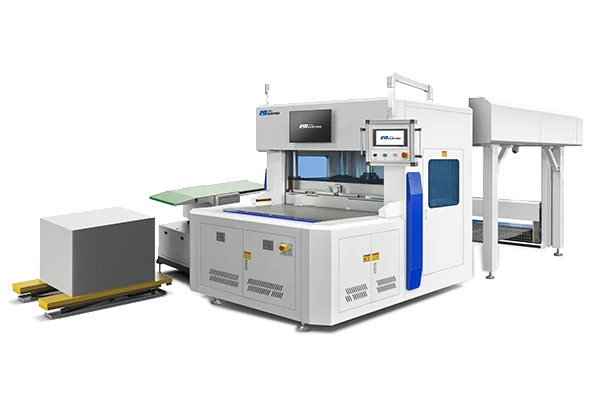
Walk into any packaging equipment showroom and you’ll hear terms like “pin stripping,” “air stripping,” “full-sheet blanking,” and “combination stripping” thrown around. Mistake number three is choosing one mechanism based on a single positive experience, without mapping it to your specific waste geometry and tooling strategy.
Here is a simplified comparison of the three main approaches:
| Mechanism | Best For | Watch Out For |
| Mechanical pin stripping | Heavy board, large waste areas, standard shapes | Tear-out on thin or brittle substrates; pin wear on abrasive boards |
| Pneumatic / air blast stripping | Lightweight waste, micro-flute, delicate surfaces | Incomplete removal of large or nested waste pieces; noise and air consumption |
| Full-sheet blanking (complete separation) | High-value litho-laminated jobs, complex die layouts, automated downstream feeding | Higher initial investment; requires precise die-cutting registration upstream |
When a plant runs diverse jobs, a combination system that pairs pin stripping with secondary air separation often delivers the best balance. However, the real differentiator is not the mechanism itself but the tooling changeover time. If swapping a stripping tool takes 20 minutes and happens three times per shift, you lose an hour of production daily. Some modern systems use servo-driven, recipe-controlled pins that reposition automatically based on the job program—a feature that converts often overlook until they watch a live tool change.
If your operation handles a significant volume of litho-laminated packaging requiring complete separation of every blank from the sheet, you may be considering a full page blanking machine for its ability to eliminate manual tearing entirely. However, even within this category, stripping pin layout, blanking grid material, and integration with the die-cutter’s register system vary dramatically between suppliers.
A purchasing manager’s spreadsheet often stops at capital expenditure. The maintenance budget picks up the real story later. I’ve spoken with plants where a seemingly affordable stripping unit consumed twice its purchase price in replacement pins, bushings, and labor over a five-year period.
The key metric to request from any supplier is the total cost of ownership (TCO) over 8,000 operating hours. This should include:
Consumption rates for high-wear items (stripping pins, rubber blankets, guides).
Mean time between failures (MTBF) for servomotors, pneumatic valves, and sensors.
Availability of spares from local stock versus factory lead time.
Recommended preventive maintenance intervals and whether they can be performed by in-house staff or require a certified technician.
Ask for a sample maintenance log from a customer running similar substrates. If a vendor cannot provide transparent data on spare parts consumption, treat that as a red flag. Before scheduling a second visit, check maintenance-friendly configurations that feature quick-access panels, centralized lubrication points, and wear sensors that alert operators before a failure stops the line.
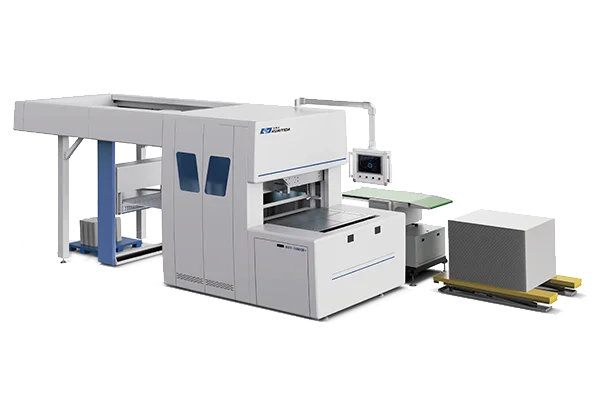
The fifth mistake is the most strategic: procuring a stripping system without considering how it feeds into the rest of the packaging line. A stripper may work flawlessly in isolation but create chaos downstream if blank alignment becomes inconsistent or if waste evacuation clogs between shifts.
Modern packaging lines increasingly operate as interconnected ecosystems. The stripping section must communicate seamlessly with the die-cutter’s registration control upstream and with stackers, palletizers, or robotic pick-and-place cells downstream. When a sheet is not completely stripped, does the system have a diverter or reject station, or does the jam propagate through the entire line? When job data changes, can the stripping parameters update automatically via a JDF/JMF workflow, or does an operator need to key them in manually?
Plants that think through this integration early often discover that an intelligent stripping unit becomes the linchpin of lights-out production ambitions. The return on investment calculation should therefore include not just waste reduction and labor savings from manual stripping, but also the avoidance of downstream stoppages and the ability to run unattended shifts.
Each of the five mistakes above stems from the same root cause: treating packaging waste stripping equipment as a straightforward off-the-shelf purchase rather than a process-critical integration project. The plants that achieve the fastest payback are those that involve operators, maintenance leads, and automation engineers in the evaluation—not just the purchasing department.
If you are looking to specify a system that avoids these pitfalls—with quick-change tooling for diverse substrates, a modular footprint that scales with your order book, and transparent maintenance data—you may find it useful to explore Kuaiyida’s integrated stripping systems. Their engineering team regularly conducts on-site substrate audits to help converters right-size the stripping configuration before a single component is ordered.
Starting with a clear map of your material range, volume forecast, and line integration requirements turns a potentially costly decision into a straightforward one. The best time to learn these five lessons is before you sign the order, not six months into production when the waste piles start growing again.
Disclaimer: The examples and scenarios described in this article are based on aggregated industry experience and do not represent specific performance data of any single machine configuration. Equipment specifications and performance depend on substrate, tooling, and operating conditions. Always consult the manufacturer for a detailed analysis based on your specific application.
Free one-year warranty.
24/7 technical support.
Efficient supply of original spare parts.


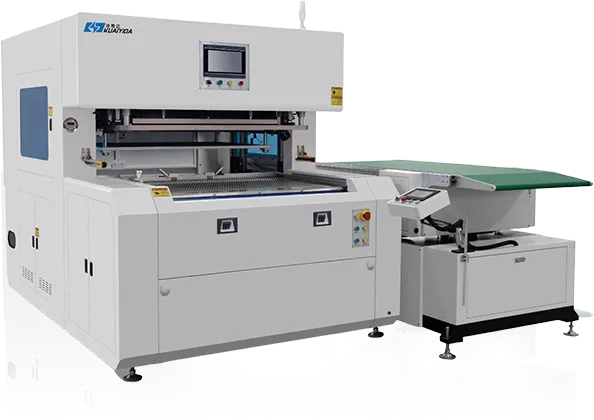
|
Core Competency |
Manual feeding + automatic waste removal |
|
Suitable Scenario |
Irregularly shaped products |
|
Minimum Product Size |
35X35mm |
|
Waste Removal Speed |
1-5 times/min |
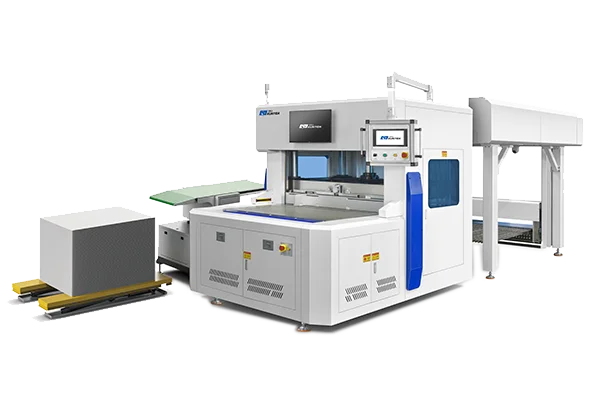
| Core Competency | Auto Collection |
| Suitable Scenario | Packaging |
| Minimum Product Size | 100*80mm |
| Waste Removal Speed | 2-3 times/min |

| Core Competency | Economical waste disposal solutions |
| Suitable Scenario | Basic packaging box |
| Minimum Product Size | 35X35mm |
| Waste Removal Speed | 1-5 times/min |
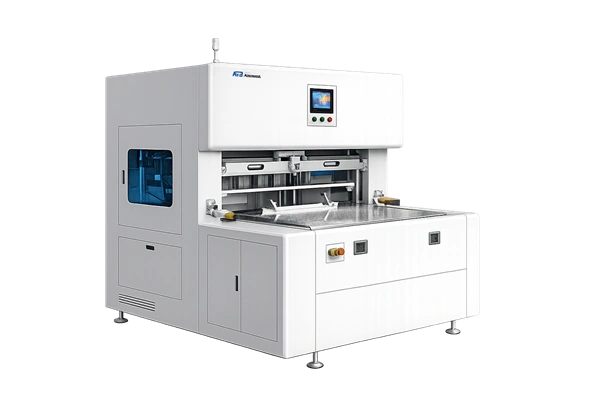
| Core Competency | waste removal |
| Suitable Scenario | Packaging |
| Minimum Product Size | 35X35mm |
| Waste Removal Speed | 1-5 times/min |

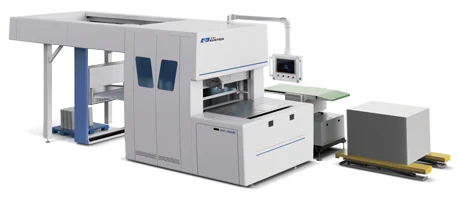


 English
 Español