If you’ve ever stood at the delivery end of a die-cutter and watched as supposedly finished sheets emerged with half the cut-outs still clinging to the carton, you know the special kind of frustration that comes from poor stripping. It’s not the glamorous part of converting—people talk about print quality, registration, and die-cutting pressures—but the moment when waste breaks free from the substrate and drops onto the pile below is, in many ways, where the margin is made or lost. A downstream gluing line doesn’t care how vivid the ink looks if the blanks are still hung up in the sheet.
Understanding what happens between the cutting rule and the stripping station, and then in the blanking section that follows, is critical for anyone running a modern packaging operation. This article walks through the engineering logic behind clean separation, without getting lost in buzzwords.
In a typical flat-bed die-cutting operation, three mechanical actions happen sequentially: the sheet is cut, the waste is removed (stripping), and the individual cartons are separated from the sheet skeleton (blanking). While cutting force and rule geometry dominate the conversation, it’s the stripping and blanking stages that often determine the actual throughput of a line.
If your stripping station can’t keep up, operators start resorting to manual knock-outs, which throws takt time out the window. If the blanking tool isn’t holding the blanks square, you generate edge damage that shows up later in the gluer. These aren’t hypothetical—they’re the first things a shift supervisor checks when a job that should run at 7,500 sheets per hour is limping along at 5,000.
The physics is straightforward but unforgiving: stripping is a tension-and-shear problem, while blanking is fundamentally a controlled break-out operation. Both depend on the geometry of the tooling, the tensile properties of the board, and the precision with which the sheet is positioned. Any hesitation, any misalignment, and you’re playing catch-up for the rest of the shift.
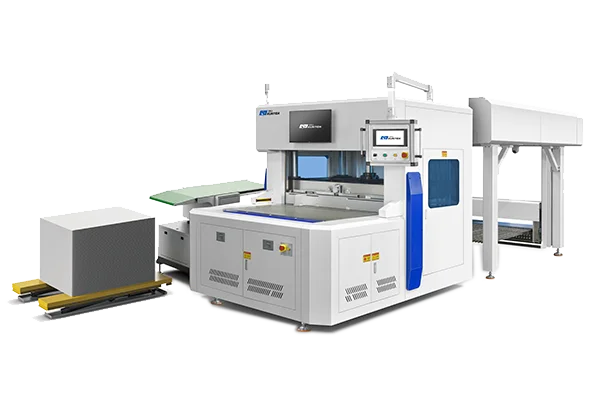
Once the cutting platen has done its work, the sheet moves into the stripping station. Here, a set of pins—arranged in a pattern that mirrors the waste areas—pushes downward through the cut lines while a lower grid supports the good areas. The difference in vertical displacement is what tears the waste free. This sounds simple, but the variables are ruthless.
First, the clearance between the stripping pins and the edges of the cut is typically set to 0.1–0.3 mm. Too tight, and you nick the carton edge; too loose, and the pin fails to catch the waste reliably. This is where running a sheet-fed die-cutting and stripping line with quick-change pin frames saves enormous setup time. Second, the elastic rebound of the substrate matters. Solid bleached sulfate (SBS) board behaves differently from recycled fiberboard under rapid tension—SBS tends to snap cleanly if the cut is deep enough, whereas a softer fiberboard may tear unpredictably, leaving ragged edges that jam the stripping grid.
Third, and most critically, is the synchronization between the stripping station and the blanking station downstream. The blanking tool takes the now-stripped sheet and presses the individual blanks through a grid into a delivery cage or onto a stack. The blanking frame must be machined to the exact contour of the finished carton, with an undercut that accommodates the board’s spring-back. If the blanks are not fully separated at this stage, or if they fall unevenly, operators face pile-ups that force production stops. An automatic sheet-fed blanking system for carton packaging relies on precisely this dance between stripping and blanking to hit sustained high speeds without manual intervention.
Stripping principles are universal, but the way a machine accomplishes them varies significantly between flat-bed and rotary configurations. Flat-bed systems clamp the sheet stationary during cutting and stripping, allowing for extremely precise rule heights and pin arrangements. This makes them the go-to for folding carton work where cut-to-print registration is non-negotiable. The trade-off is speed: a flat-bed platen must stop and start the sheet with each cycle, which caps the mechanical rate.
Rotary systems, by contrast, use magnetic or engraved cylinders that cut, strip, and blank in a continuous motion. They’re faster, often reaching 12,000 sheets per hour or more, but the stripping cylinder design becomes incredibly demanding. The pins or ejector rings must maintain their timing across millions of revolutions, and any wear on the cylinder surface immediately shows up as incomplete stripping. For long-run corrugated or flexible packaging jobs, the rotary route offers undeniable throughput advantages—provided the maintenance discipline is there.
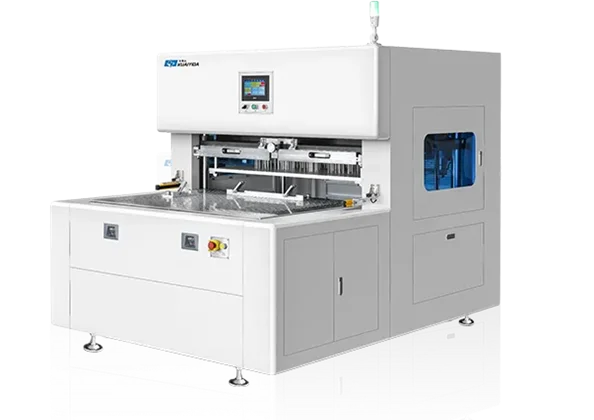
No matter which process you run, a handful of field-proven practices separate the lines that run lights-out from those that need constant babysitting. Start with the tooling: stripping pin diameter should be chosen based on the smallest waste piece dimension. A common rule of thumb is pin diameter = (smallest waste width × 0.7), though board caliper and density will shift that figure. Reference the die-maker’s specifications and, where possible, benchmark against ISO 12648:2006, which outlines safety and performance requirements for platen presses and tooling.
Next, pay attention to the knife-cut quality before stripping even begins. If the cutting rule hasn’t penetrated the bottom liner cleanly—often due to worn cutting plates or insufficient make-ready—the stripping pins have to work against partially attached fibers, dramatically increasing the force required and the risk of tearing. A microscope inspection of the cut edge every few thousand sheets can catch rule wear before it turns into a stripping nightmare.
Another under-discussed variable is sheet topography. Paper and board are hygroscopic; they take on moisture from the air and release it. A sheet that’s curly at the edges won’t register cleanly in the stripping grid, and the pins will push at an angle rather than perpendicular to the surface. Climate-controlled staging areas aren’t a luxury—they’re an insurance policy for consistent stripping. This is especially true for converters running high-volume die-cutting and stripping solutions for packaging manufacturers, where even a 0.5% increase in downtime from misfeeds erodes the margin built into the job.
There’s a moment every production manager recognizes: you’ve optimized pin patterns, replaced worn strippers, fine-tuned the blanking frame, and the line still can’t keep pace with orders. At this point, the bottleneck isn’t the tooling or the crew—it’s the machine’s design envelope.
Older die-cutters often force a compromise between sheet size and stroke rate. Trying to run a B1 sheet at high speed through a platform that wasn’t originally engineered for that workload introduces vibration, accelerates wear on the toggle mechanism, and widens the window in which stripping pins and blanking frames can go out of alignment. The same logic applies if you’ve recently switched to a lighter-weight board to reduce material costs—the substrate is simply more sensitive to any timing inconsistency.
Moving to a purpose-built, large-format system allows you to eliminate the compromises around sheet size, speed, and stripping force in a single step. A modern full page blanking machine, for example, integrates servo-driven blanking frames and independently adjustable stripping stations, so the tooling can be tuned to the specific caliper and cut complexity of each job without affecting overall cycle time. Such a configuration can handle formats up to the full press sheet with far fewer interruptions, particularly on high-density layouts where dozens of small cartons are nested together.
If your operation is beginning to brush against the upper limits of what your current machine can deliver, it may be time to look at how a dedicated, high-format platform rebalances the equation between stripping reliability and throughput. You can explore advanced configurations for large-format sheet blanking that are engineered specifically for converters scaling from millions to tens of millions of cartons per year.
Stripping and blanking aren’t an afterthought—they’re a clock cycle. Every sheet that fails to separate fully is a direct cost: wasted board, wasted energy, wasted labor. The technical principles that govern clean break-out haven’t changed dramatically in decades, but the precision with which modern equipment can execute them has. Tooling geometry, substrate conditioning, machine rigidity, and digital synchronization now combine to push the reliable operating window far beyond what was achievable even ten years ago.
If you’re hoping to gain a more professional grip on this part of your converting workflow, you may find it worthwhile to have a look at how KUAIYIDA approaches the challenge. Their platform is designed around the idea that stripping and blanking should be tuned independently but controlled centrally, and the resulting throughput numbers for carton applications speak for themselves. You can browse KUAIYIDA’s stripping and blanking system range to see whether a more flexible configuration might align with your next growth phase.
Disclaimer: This article is for informational purposes only and does not constitute engineering advice. Equipment specifications and capabilities should be verified directly with the manufacturer. References to ISO 12648:2006 are intended for general guidance and may not apply to all machine categories.
Free one-year warranty.
24/7 technical support.
Efficient supply of original spare parts.


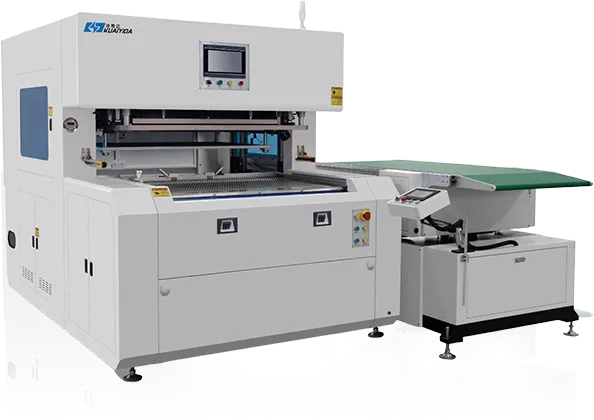
|
Core Competency |
Manual feeding + automatic waste removal |
|
Suitable Scenario |
Irregularly shaped products |
|
Minimum Product Size |
35X35mm |
|
Waste Removal Speed |
1-5 times/min |
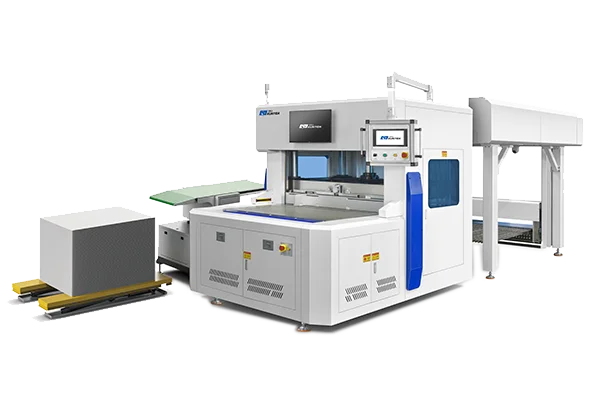
| Core Competency | Auto Collection |
| Suitable Scenario | Packaging |
| Minimum Product Size | 100*80mm |
| Waste Removal Speed | 2-3 times/min |

| Core Competency | Economical waste disposal solutions |
| Suitable Scenario | Basic packaging box |
| Minimum Product Size | 35X35mm |
| Waste Removal Speed | 1-5 times/min |
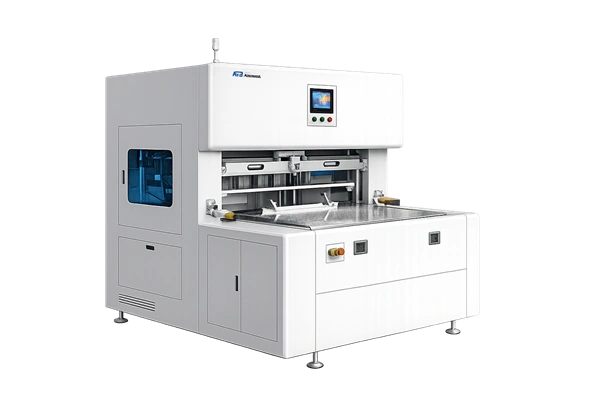
| Core Competency | waste removal |
| Suitable Scenario | Packaging |
| Minimum Product Size | 35X35mm |
| Waste Removal Speed | 1-5 times/min |



 English
 Español