Every packaging converter has seen it: the die-cutter is running at full speed, but ten meters downstream, a team of operators is manually pulling half-attached scraps from a delivery pile. It’s the bottleneck nobody planned for. The root cause is rarely the die-cutter itself—it’s the stripping and blanking equipment that wasn’t specified correctly. Before you sign a purchase order, it’s worth stepping back to look at what a modern, automated stripping solution can do when it’s matched to your actual production environment.
Based on field data from dozens of packaging plants—and more than a few expensive retrofits—here are the five mistakes that repeatedly turn a promising capital investment into a downtime machine.
A stripping unit that demolishes 3 mm solid board might barely touch 0.3 mm coated folding carton stock. Conversely, a system dialed in for lightweight paperboard will struggle when you run heavy double-wall corrugated. Yet many buyers evaluate a machine by running only their most common substrate—and then act surprised when seasonal packaging mixes break the process.
What’s really happening: stripping pin height, pin density, and the draw of the stripping frame interact differently with flute profiles, fiber orientation, and moisture content. According to a 2023 TAPPI troubleshooting roundtable, substrate-related stripping faults account for approximately 18% of unplanned post-press downtime.
What to do instead: bring three substrates to a demonstration—your lightest, your heaviest, and the one that gives you the most scrap-rate headaches. Document not just whether the waste falls away, but whether sheet distortion, pin marks, or erratic transport occur when switching substrates on the same shift.
Yes, a machine that strips 12,000 sheets per hour sounds impressive. But if it needs a 15-minute intervention every two hours, your net output can be worse than a 9,000-sheet-per-hour system that holds tolerance across a full shift.
Stability killers include under-built frames that flex under cyclic load, inadequate vacuum or blast timing for lightweight waste, and stripping grids that are simply too large to maintain uniform pin pressure. One Midwest folding carton plant shared with us that their previous “high-speed” stripper delivered 40% less daily output than advertised once they factored in recurring jam clearance and pin repositioning.
Action item: ask for a complete speed-loss timeline. Reputable suppliers can provide logs showing the real gap between design speed and sustained running speed. If you can’t get that data, treat the top-speed claim as a marketing number, not an engineering guarantee.
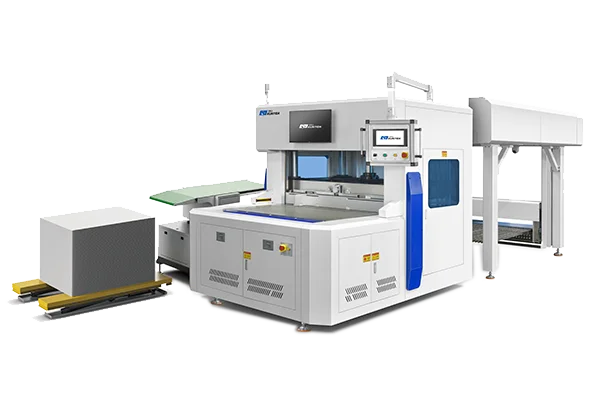
This might be the most expensive terminology mistake in post-press equipment. Conventional stripping stations are excellent at removing waste along the perimeter and small internal gaps. But when your layout demands removing almost the entire sheet edge or a huge internal window—think large display trays, wrap-around graphics, or integrated dividers—you’re no longer just stripping. You’re blanking. An edge stripper, even a well-tuned one, will often leave large waste pieces clinging by a few fibers. The operators then spend their shift pushing, pulling, and pausing the line.
The deeper problem is that many buyers don’t realize the threshold where a standard stripper becomes unworkable. When waste pieces exceed roughly 40% of the sheet area or span the full width, the mechanics change completely. This is where a system that integrates high-precision stripping with full-sheet separation becomes essential. An advanced full-sheet scrap separation and blanking system handles both regular stripping and full-page waste removal in one pass, maintaining cycle speed without operator intervention. In fact, a full page blanking machine (note the distinction in terminology) is engineered specifically for layouts where conventional stripping pins alone can’t release the sheet cleanly.
You’ll change stripping grids and pin positions far more often than you imagine—sometimes multiple times per shift if you run a mix of short-run jobs. A machine with beautifully machined pins but a poorly designed quick-change mechanism can drain 45 minutes per format swap. Over a year of mixed production, that can quietly eat hundreds of machine hours.
When you evaluate equipment, time a complete format change from last sheet of job A to first good sheet of job B. Watch for hidden steps: manual pin indexing, needing two operators to lift frames, or chasing pins that lack laser-etched position guides. The design goal should be single-operator changeover in under 15 minutes, with clear alignment markings that remove guesswork. Before you commit to a full page blanking machine, confirm that the quick-change system has been proven on jobs similar to your typical order mix—not just on paper.
It’s human nature to compare upfront capital numbers, but stripping equipment lives or dies by its consumables, maintenance schedule, and hidden energy costs. Are extra stripping pins included, or will you pay per pin for three years? How often do the drive belts need tensioning? Is the control system proprietary, locking you into expensive service contracts?
One corrugated converter calculated that a machine priced 20% higher at purchase saved them €18,000 in the first two years simply because its modular pin boards reduced replacement time and its standard motor controllers could be serviced locally. TCO modeling that accounts for energy draw, expected wear parts, and labor for jam clearing will give you a far clearer picture than the invoice price alone.
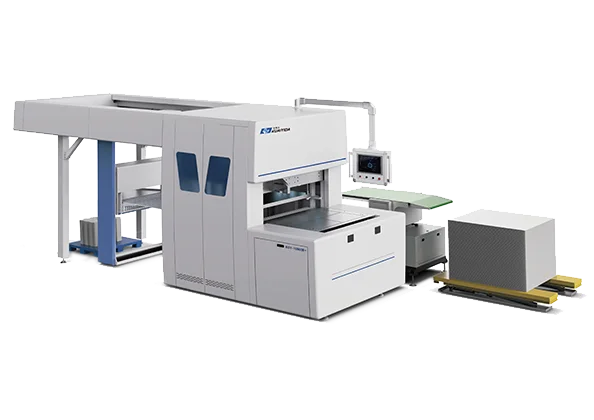
If you step back and look at the pattern across these five mistakes, the common thread is that specifications were written from a catalog rather than from the production floor. The most successful equipment buyers we’ve worked with follow a simple rule: define the problem jobs first, then find the machine that solves them—never the other way around.
If you’d like to see how a purpose-built approach reduces both scrap rate and changeover time, you can request a tailored configuration analysis for your specific die-cutting layout and substrate mix. Kuaiyida’s system is designed around the idea that a full page blanking machine should adapt to your jobs, not force your jobs to adapt to a fixed pin grid. The modular stripping stations, quick-lock pin registers, and integrated full-sheet separation are all aimed at giving you one clean pass, consistently.
Disclaimer: This article provides general educational guidance and should not replace a hands-on equipment evaluation with your specific substrates and job layouts. Always request live demonstrations on your actual production materials.
Free one-year warranty.
24/7 technical support.
Efficient supply of original spare parts.


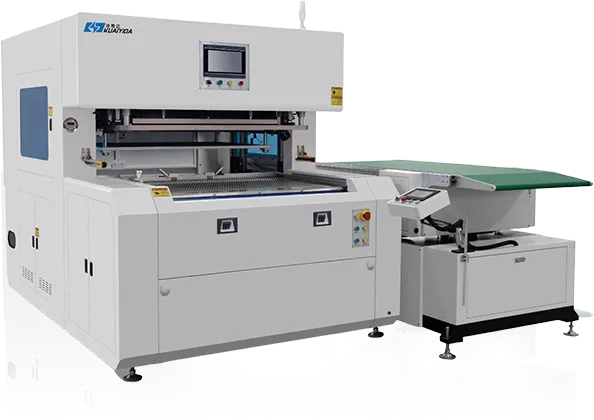
|
Core Competency |
Manual feeding + automatic waste removal |
|
Suitable Scenario |
Irregularly shaped products |
|
Minimum Product Size |
35X35mm |
|
Waste Removal Speed |
1-5 times/min |
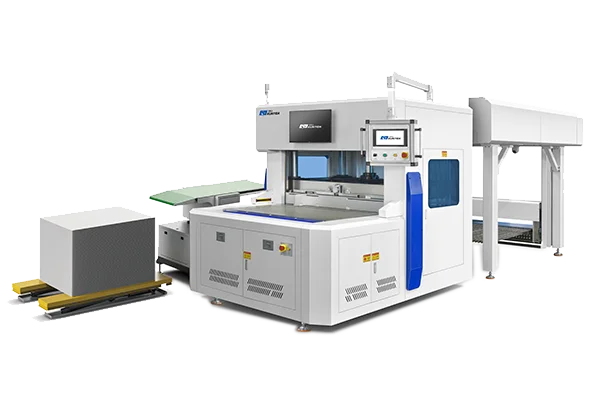
| Core Competency | Auto Collection |
| Suitable Scenario | Packaging |
| Minimum Product Size | 100*80mm |
| Waste Removal Speed | 2-3 times/min |

| Core Competency | Economical waste disposal solutions |
| Suitable Scenario | Basic packaging box |
| Minimum Product Size | 35X35mm |
| Waste Removal Speed | 1-5 times/min |
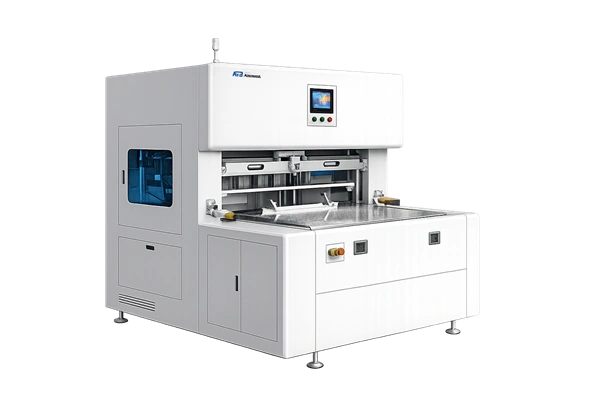
| Core Competency | waste removal |
| Suitable Scenario | Packaging |
| Minimum Product Size | 35X35mm |
| Waste Removal Speed | 1-5 times/min |



 English
 Español