Walk into almost any label or folding carton plant and you’ll hear the same quiet frustration: the press runs at full speed, the die cutter keeps up, but the line still loses hours every shift. The bottleneck isn’t where most people look. It’s the moment the die-cut sheet meets the waste matrix — and whether that waste comes away clean in seconds, or in minutes of picking, pausing, and re-pinning.
Two philosophies dominate the way converters handle this critical step. Some swear by removing waste in a single, full-sheet stroke. Others trust a row-by-row approach that treats each lane of cavities separately. Both claim to reduce stripping downtime. But until now, the debate has been driven more by habit than by side-by-side numbers.
We decided to change that. Over a two-week period, we ran a controlled head-to-head test on medium-run label and carton jobs, measuring the real stripping performance of both methods under production-floor conditions. If you are currently mapping out an upgrade for your die-cutting line, you might want to take a close look at an advanced sheet-based stripping solution that addresses exactly these pain points — but first, let the data speak.
We selected three representative materials that regularly cause stripping headaches: a 80 g/m² coated paper, a 50-micron clear BOPP film, and a 350 g/m² recycled carton board. Each job used an identical die layout — a grid of 48 rectangular labels, spaced with a 3 mm matrix skeleton and nicked at four points per label — to eliminate layout variation.
For the full-sheet approach, we used a standard full-page blanking machine with a servo-driven upper and lower stripping frame, running at a fixed stroke rate of 35 cycles per minute. The row-blanking setup consisted of a pin-based stripping station processing four rows sequentially. Both stations were fed from the same rotary die cutter and manned by operators with at least three years of experience.
We tracked four metrics:
First-pass stripping success rate: percentage of sheets leaving the station with all waste fully removed, no manual intervention.
Gross cycle time per sheet: from sheet entry to the stacker infeed.
Micro-stop events: any operator intervention that paused the line for more than three seconds.
Edge-quality score: an ASTM-based visual inspection for nicks, tears, or lifted liners on the finished blanks.
The raw numbers told a story that will feel familiar if you’ve ever stood over a stripping table with tweezers. On coated paper, the full-sheet method achieved a 99.8% first-pass success rate across 10,000 sheets. The row-blanking station averaged 97.2%, with the majority of failures concentrated along the leading and trailing rows. On film, the spread widened dramatically. The full-sheet process held at 99.5%, while the row method dropped to 91.3% — largely because the unsupported film edges between pin rows would occasionally fold and re-adhere, creating a “tent” of waste that required manual lifting.
For carton board, both methods performed well above 98%, but the row method generated 3.2 times as many micro-stops. The reason was predictable: the heavier caliper meant waste pieces on later rows would occasionally catch on the already-cleared frame, demanding a quick operator flick.
If your production mix leans toward flexible substrates or unsupported films, the gap you see here is not marginal — it’s the difference between a line that runs lights-out and a line that needs a full-time stripping attendant.
One of the most persistent myths we hear is that row blanking must be faster because it uses a simpler motion profile. The test proved the opposite at the line level.
While the pin-based row station completed its mechanical cycle in 1.2 seconds, the need to index the sheet and re-register after each row added hidden time. The full-page approach completed a single longer stroke, but because it required no intermediate indexing, its effective sheet-to-sheet time came in at 1.7 seconds — and once you factored in the micro-stops, the full-sheet line processed 18% more sellable sheets per hour on the BOPP job.
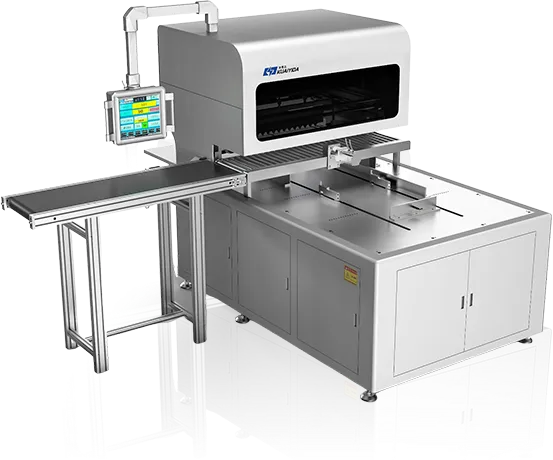
This inversion is something many production managers miss when comparing spec sheets. A fast single-cycle time means little if you are stacking up stoppages. What matters is the sustained, net output across a full shift — and there, the full-sheet principle’s ability to handle all waste in one decisive motion gave it a clear advantage on mixed-material schedules.
We also timed five complete job changeovers on each system. Here the row-blanking station had a slight edge: swapping pin sets and adjusting the row pitch took an average of 8.2 minutes, versus 10.5 minutes for the full-sheet blanking unit’s larger stripping frame. The difference, however, narrowed sharply when the operators used magnetic quick-lock frames and pre-configured stripping boards — a practice that any shop running more than three jobs per day should already have in place.
The takeaway for short-run converters: if your average run length is under 2,000 sheets, the row method’s faster changeover may have a real economic pull. But once you pass 5,000 sheets, the full-page method’s higher throughput and lower intervention rate more than compensate for the few extra minutes of setup. One of our test days ran a 15,000-sheet film job; the full-page line finished 22 minutes earlier than the row line despite starting setup 2 minutes later.
Many operations have normalized manual waste removal. One operator on the test floor told us he spends roughly 40% of his shift re-clearing sheets that the row station didn’t fully strip. At that rate, the labour cost alone — never mind the risk of repeated handling damage — often outstrips the depreciation and energy cost of a more automated stripping module.
This is where the industry conversation is shifting. Rather than treating the stripping station as a commodity add-on, more converters are starting to evaluate it as a primary determinant of overall equipment effectiveness. If you are re-thinking your process architecture, you can view stripping station configurations that are built specifically for high-mix, film-heavy environments.
Based on the data and the operator interviews, we distilled the decision logic into a few practical signals.
You should lean toward a full-sheet stripping strategy if:
Film, unsupported paper, or recycled board represent more than 30% of your mix.
Average run lengths exceed 5,000 sheets.
Labour availability is a constraint, and you want to reduce stripping attendants.
You are already automating stacking and palletising, and manual intervention breaks the digital chain.
Row blanking remains a perfectly sensible choice if:
90% of your work is on heavyweight board or stiff paper with large, simple labels.
Your average job changes five or more times per shift and run quantities are tiny.
You need the lowest upfront capital expenditure and can allocate operator time flexibly.
Notice that none of these recommendations are absolute. The “best” stripping philosophy is always the one that aligns with your actual order book — not with a sales brochure.
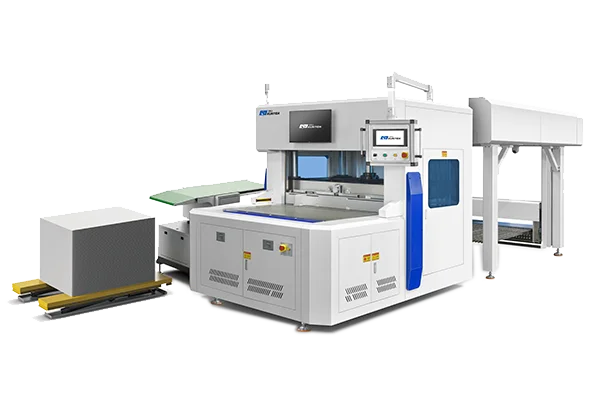
We observed one behavioural factor that deserves its own spotlight. On the second day of testing, the full-sheet unit developed a slight unevenness in stripping pressure on the left frame edge. The operator noticed it within six sheets — because the full-page action makes any inconsistency instantly visible across the whole web. On the row unit, an equivalent pin misalignment went unnoticed for over 200 sheets because the flaw only manifested on row four, and the operator’s attention was already downstream.
The lesson here is about signal strength. A full-page blanking machine amplifies tiny problems into visible ones, which sounds worse but is actually a diagnostic advantage. It forces early correction. A row system, by contrast, can silently degrade until a customer rejects a shipment. If you value process visibility and want to catch mechanical drift before it becomes a quality claim, that diagnostic transparency alone can justify the equipment choice.
Every stripping test has limitations, and ours is no exception. We ran mid-volume jobs on commonly used materials, but we didn’t push into extreme micro-labels or heavily nested perforated cartons. If your product mix includes those edge cases, you’ll want to run your own trials — and any reputable equipment builder should be willing to support sample testing with your actual dies and stocks.
As you plan that next step, it helps to have a development partner that has already done the engineering work on high-efficiency stripping modules. Kuaiyida has been focusing on exactly this challenge, and their integrated waste removal system is designed around the principles that emerged as decisive in our testing: single-stroke matrix separation, quick-lock stripping frames, and a flat pressure profile that keeps unsupported films from wrinkling during the strip stroke.
What impressed us most during the follow-up discussions was the level of detail around the stripping pin geometry and vacuum assist options — factors that often get overlooked in spec comparisons but make a measurable difference on the 50-micron films that are becoming ubiquitous in the sustainable packaging space. If you are currently losing sleep over film waste removal, it is worth checking whether your existing stripping station can be retrofitted with these kinds of substrate-specific enhancements, or whether you need a platform built from the ground up for the materials you are running three years from now.
Our test confirmed what many converters have suspected: the stripping station is not a secondary accessory. It is a primary driver of net output, labour cost, and waste rate. And on the majority of mixed-substrate, medium-to-long-run jobs, the full-sheet approach delivered a level of repeatability that the row method could not match without substantial operator intervention. The numbers are here. The decision is yours.
All tests were conducted on production-grade equipment in a facility operating at 23°C ±2°C and 50% ±5% relative humidity. Sample sizes were 10,000 sheets per material per method. Throughput figures include all micro-stops lasting >3 seconds. Your results may vary based on die layout, nick configuration, material aging, and operator training. This article reflects observed performance only and does not constitute a warranty of specific outcomes.
Free one-year warranty.
24/7 technical support.
Efficient supply of original spare parts.


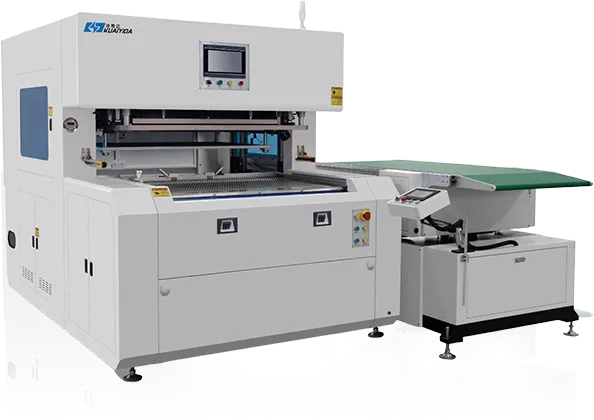
|
Core Competency |
Manual feeding + automatic waste removal |
|
Suitable Scenario |
Irregularly shaped products |
|
Minimum Product Size |
35X35mm |
|
Waste Removal Speed |
1-5 times/min |
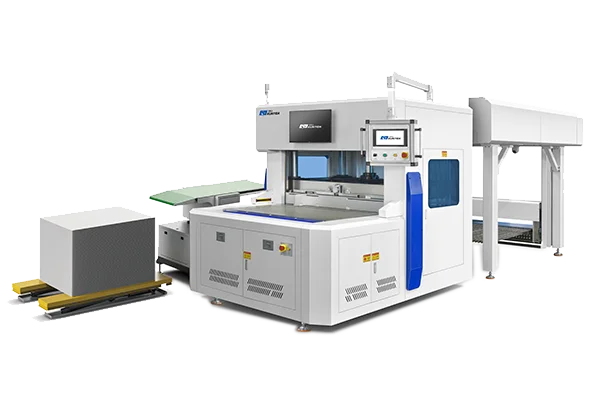
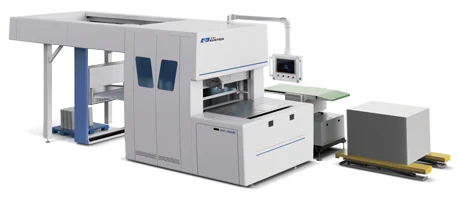
| Core Competency | Auto Collection |
| Suitable Scenario | Packaging |
| Minimum Product Size | 100*80mm |
| Waste Removal Speed | 2-3 times/min |

| Core Competency | Economical waste disposal solutions |
| Suitable Scenario | Basic packaging box |
| Minimum Product Size | 35X35mm |
| Waste Removal Speed | 1-5 times/min |
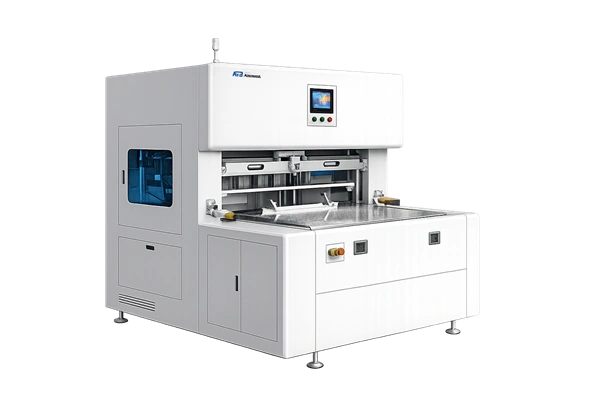
| Core Competency | waste removal |
| Suitable Scenario | Packaging |
| Minimum Product Size | 35X35mm |
| Waste Removal Speed | 1-5 times/min |



 English
 Español