You’ve got a high-speed die-cutter spitting out sheets faster than your team can clear them. The waste matrix—those thin skeletons of leftover material—cling to the finished blanks like stubborn vines. One wrong tug, and the product bends. Too slow, and the line backs up. Sound familiar?
This is exactly why understanding the mechanical separation logic inside a modern stripping system matters. Not the theory. The actual motion. The sequence. The split-second timing that turns a tangled sheet into a clean, stackable blank.
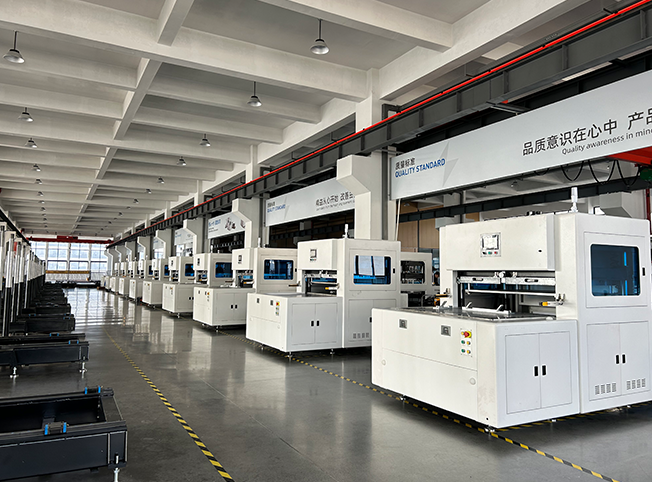
Every automatic waste removal system, regardless of brand, follows the same three-step rhythm: feed, strip, separate. What changes is the precision, speed, and reliability of each stage.
The process starts with a pile of die-cut sheets—waste still attached. An automatic feeder pulls one sheet at a time, aligning it against side guides and front stops. This isn't just about moving material. It's about positional accuracy. If the sheet enters even two millimeters off, the stripping tools will miss the waste entirely.
Most industrial systems use friction feed or suction feed mechanisms. The better ones include double-sheet detectors to prevent two sheets from jamming the stripping station. According to industry benchmarks, a double-sheet error can cause tool damage costing 2,000–2,000–5,000 in repairs. That’s a hard way to learn why feeding matters.
This is the heart of the operation. The sheet moves between two tools: an upper stripper and a lower counter-tool. Think of them like a custom punch and die set. The waste matrix is held by pins or grippers while the finished blank is pushed downward—or lifted upward—separating the two.
Here’s what most people get wrong: it’s not cutting. The tools don’t slice. They apply controlled vertical force at specific points, breaking the tiny bridge connections (called nicks) that hold waste to the blank. The entire separation happens in under half a second.
Common configurations include:
Fixed pin racks for simple carton shapes
Movable finger tools for complex contours
Quick-change cassettes for job-to-job flexibility
If your product mix changes daily, the last option is your friend. Facilities running over 50 job changes per week report that tool change time becomes a hidden efficiency killer. Some systems reduce changeover from 45 minutes to under 5.
After stripping, two streams emerge. The finished blanks move toward the stacker, aligned and counted. The waste matrix—now free—gets pulled away by a conveyor or suction system into a collection bin or baler.
A clean separation here prevents waste reattachment, which happens when static electricity or tangled matrix falls back onto the product pile. Quality stripping systems include anti-static bars or brush stations to solve exactly this problem.
The difference between a good strip and a damaged product comes down to two variables: pneumatic pressure (or servo force) and dwell time. Too much force, and you crush the carton. Too little, and the waste hangs on. Too fast, and the tear propagates into the product. Too slow, and your throughput tanks.
Modern machines allow operators to dial these parameters per job—and save them for recall. That’s the difference between a system that fights you and one that remembers. For plant managers running mixed SKUs, this job memory feature alone can save hours of setup per week.
Even with automation, some waste remains stubborn. Internal cutouts (windows, handles, small holes) may not eject fully. That’s why most automatic systems include a manual inspection station at the end—not for primary stripping, but for spot-checking and removing occasional hangers-on.
However, if your operators spend more than 5% of their time picking waste off finished stacks, your stripping system isn’t doing its job. A well-tuned automatic process should deliver clean blanks over 99% of the time. Anything less, and you’re paying people to do what a machine should have done.
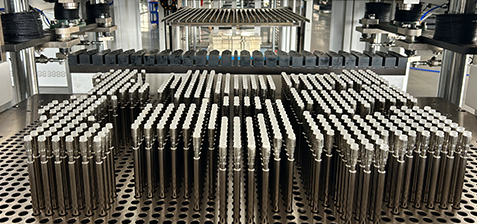
Mistake #1: Ignoring tool wear. Stripping pins and fingers dull over time. A worn pin doesn't grip the waste firmly, leading to partial separation. Best practice: inspect tools every 500 operating hours and replace any with visible rounding.
Mistake #2: Incorrect sheet alignment. Even the best stripping station can't fix a sheet fed crooked. Check your side guides and front stops daily. A 1mm drift creates a cascade of jams.
Mistake #3: Forgetting waste extraction. If the stripped waste doesn't clear the station immediately, it can tangle with the next sheet. Ensure your conveyor or blower system is sized for peak output—not average throughput.
Once your stripping volume exceeds 10,000 sheets per shift, or your product variety forces frequent tool changes, the conversation shifts from "does it work" to "how smart is it." This is where servo-driven systems with recipe storage and auto-adjusting tools enter the picture. They don't just strip waste. They learn each job's optimal parameters and replicate them perfectly every time.
If you're currently evaluating which level of automation fits your floor, review the specific configurations available to compare fixed versus quick-change tooling options. The right choice depends entirely on your job mix—not just your volume.
Understanding the die-cut waste removal process isn't academic. It's about knowing where your current bottleneck hides. A machine that feeds accurately, strips cleanly, and separates completely is the difference between a line that flows and a line that frustrates.
And if you're still unsure whether your current stripping pain justifies an upgrade, request a process evaluation here. Sometimes the cheapest machine is the one you already have—but only if it's actually delivering clean blanks. If not, every shift is a lesson in what you're leaving on the table.
Free one-year warranty.
24/7 technical support.
Efficient supply of original spare parts.


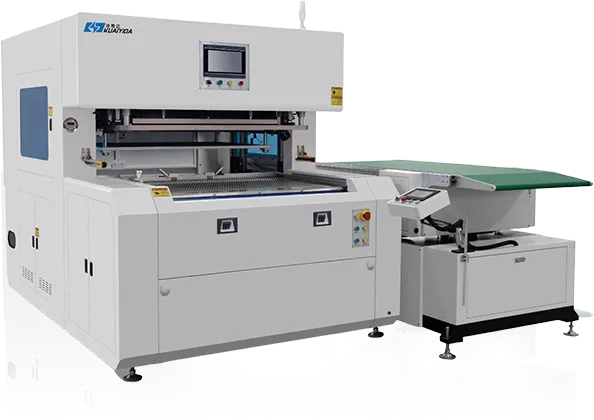
|
Core Competency |
Manual feeding + automatic waste removal |
|
Suitable Scenario |
Irregularly shaped products |
|
Minimum Product Size |
35X35mm |
|
Waste Removal Speed |
1-5 times/min |
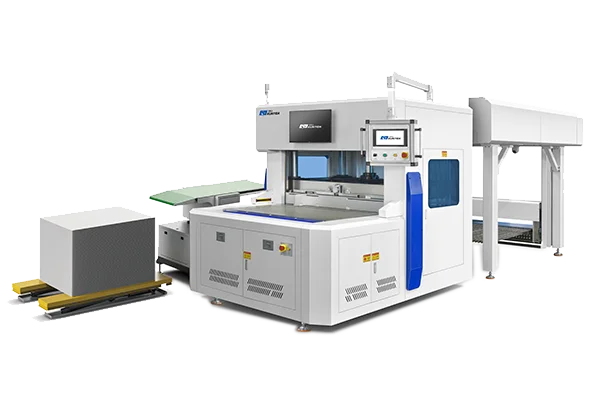
| Core Competency | Auto Collection |
| Suitable Scenario | Packaging |
| Minimum Product Size | 100*80mm |
| Waste Removal Speed | 2-3 times/min |

| Core Competency | Economical waste disposal solutions |
| Suitable Scenario | Basic packaging box |
| Minimum Product Size | 35X35mm |
| Waste Removal Speed | 1-5 times/min |
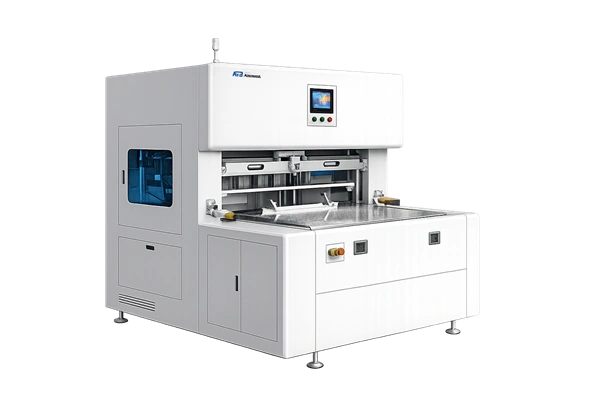
| Core Competency | waste removal |
| Suitable Scenario | Packaging |
| Minimum Product Size | 35X35mm |
| Waste Removal Speed | 1-5 times/min |



 English
 Español