Ask any production supervisor who runs a converting line and they will tell you: once the die-cutting is done, the real headache begins. Separating finished parts from waste skeletons—especially on plastic substrates—can become a bottleneck that negates all the speed gained upstream.
Why plastic? Unlike paperboard or corrugated stock, plastic sheets bring their own set of temperamental behaviors to the shop floor. They generate static. They stretch and rebound. Their edges, if not treated right, show burrs that quality inspectors will flag immediately. A semi-automatic stripping and blanking machine—the kind that sits between the die-cutter and final packaging—has to handle all of these quirks without slowing the line or damaging the product surface.
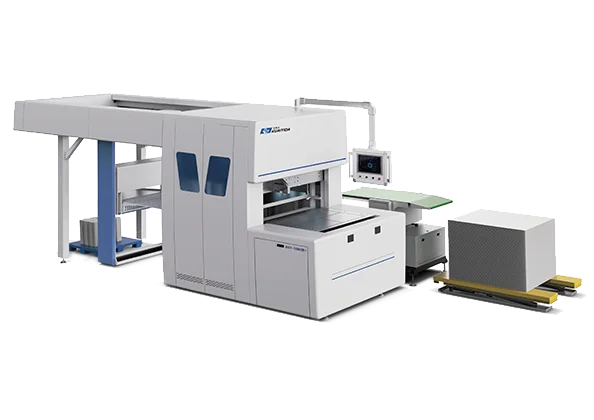
Walk through any packaging plant that processes PVC, PET, or PP sheets, and you will spot the same friction points. After die-cutting, the sheet emerges with an array of cutouts—blister card windows, hang tag holes, folding carton profiles—still attached to a web of waste material. On paper grades, a traditional stripping station with upper and lower pins can knock that waste out reliably. On plastic, though, three things complicate the picture:
Static cling. Plastic sheets accumulate surface charge rapidly, especially in dry workshop environments. The waste skeleton clings to the product area and the pins themselves, resisting the mechanical separation force.
Material rebound. Plastics have higher elastic recovery than paper. A PET sheet that is 0.5 mm thick will spring back slightly after the stripping pins retract, potentially re-locking small waste fragments into the product.
Surface sensitivity. Unlike kraft or SBS board, transparent plastic packaging shows every scratch, scuff, and rub mark. The stripping mechanism must apply enough force to remove the waste but not so much that it mars the product surface.
A 2025 simulation study on PTFE sheet blanking confirmed that incorrect die geometry leads to large collapse angles, section depressions, and uneven fracture surfaces—defects that are immediately visible on plastic parts and difficult to correct downstream.
The semi-automatic approach strikes a balance between fully manual waste removal (slow, inconsistent, labor-intensive) and fully automated inline systems (high capital cost, less flexibility for short runs). Here is how the workflow typically runs when processing plastic sheet stock.
The operator takes the die-cut sheets—still in their full-page format with waste attached—and loads them as a stack onto the machine‘s lower platen. Alignment is critical at this stage because plastic sheets, being more flexible than paperboard, can curl at the edges if they have been stored in a humid environment or wound under tension.
A well-designed machine supports stacks up to 80 mm in height, allowing multiple sheets to be processed in a single cycle.
This is where the semi-automatic design delivers its biggest time saving. Instead of fabricating a dedicated stripping mould for each job, the operator positions upper and lower pins on a honeycomb plate frame according to the die layout. The lower pins support the product areas from underneath, while the upper pins press down precisely on the waste skeleton.
For short-run plastic packaging—think seasonal blister card designs or customized IML (In-Mold Labeling) trim—this pin-based system slashes changeover time. The operator does not need to wait for a mould to be machined, tested, and shipped. For some configurations, job changeover can be completed in as little as 10 minutes.
Once the pins are set, the upper platen descends and the pins push the waste material downward through the openings in the lower platen. The product areas—windowed blister cards, hang tags, folding carton blanks—remain supported and intact.
For plastic materials specifically, the stripping force needs to be calibrated for the material thickness and type. PVC sheets under 0.3 mm can tear if excessive pressure is applied. PP, with its higher tensile strength, can withstand more aggressive stripping force but may generate more dust at the fracture points. Skilled operators learn to dial in the pressure—some machines offer adjustable pneumatic settings—to match the substrate.
The goal is straightforward: complete waste removal in a single pass. When it works well, the separated parts drop cleanly onto a collection tray while the waste skeleton is ejected. You can explore how this single-pass waste separation works for diverse packaging shapes by checking the detailed mechanism of modular stripping equipment designed for plastic packaging applications.
Immediately after stripping, the operator spot-checks the blanked edges. On plastic, acceptable quality means a perpendicular, smooth cross-section with minimal burrs. The industry rule of thumb for blanking clearance—approximately 10–15% of material thickness—applies to plastics as well, though the optimal gap varies by polymer type.
If burrs are observed, the operator knows to check two things: the cutting rule sharpness on the die-cutter (upstream) and the stripping pin pressure (on this machine). Edge treatments like chrome plating on cutting rules can extend die life when running abrasive plastic materials.
Even experienced operators encounter these three issues on a regular basis. Understanding why they happen—and how to prevent them—can significantly reduce downtime.
| Pitfall | Cause | Practical Fix |
|---|---|---|
| Static-induced waste reattachment | Low workshop humidity; high-speed friction on plastic surface | Install ionizing bars near the stripping zone; maintain ambient humidity above 40% RH |
| Burr formation on cut edges | Dull cutting rules; incorrect pin pressure | Inspect rules every 5,000 cycles; reduce stripping pin pressure incrementally |
| Thin-sheet warping after stripping | Plastic stored under tension; uneven pin support | Flatten sheets before loading; verify lower pin contact covers all product areas |
The Marbach Experience Hub recently released a whitepaper emphasizing that automated blanking is the latest trend, and that selecting the right blanking technology for a given job requires a systematic understanding of material behavior and machine parameters. For operators transitioning from paper to plastic, that systematic understanding is everything.
There is a case to be made that semi-automatic equipment occupies a practical sweet spot in the converting workflow. Here is the logic:
Shorter runs, more changeovers. Plastic packaging jobs—especially for cosmetics, electronics, and specialty food items—tend to involve shorter production runs with frequent design changes. A semi-automatic setup with pin-based tooling handles these changeovers without the downtime associated with hard tooling.
Material versatility. The same machine can process multiple sheet materials by simply adjusting the pin configuration and pressure settings. Plastic sheets, corrugated paper, grayboard, and cardstock can all run on the same equipment.
Labor efficiency. Manual waste stripping is slow, prone to repetitive-strain injury, and inconsistent in output quality. Semi-automatic operation replaces most of the manual labor while keeping the operator in control of loading, pin arrangement, and visual inspection.
For packaging converters looking to take their plastic waste-stripping to a more efficient level, it is worth learning how the pin-based stripping mechanism achieves clean waste separation on blister cards and IML sheets.
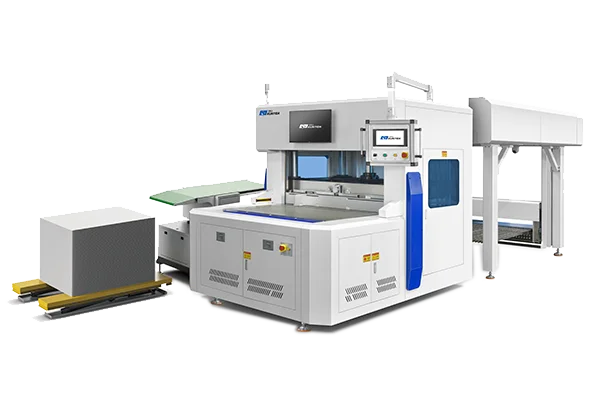
If you are currently stripping plastic sheets by hand, the upgrade path does not have to be disruptive. Here is a roadmap based on what has worked for converters across multiple markets:
Start with job analysis. Document your most common die layouts, material types, and sheet sizes. Identify which jobs cause the most labor hours in manual stripping—those are your quick wins.
Run a trial batch. Test a representative job on a semi-automatic stripping and blanking machine to validate cycle time, edge quality, and changeover speed. Pay particular attention to how the pins interact with the specific plastic grade you use most often.
Train operators on pin configuration. The learning curve is modest—most operators become proficient within a few shifts—but the payoff comes when they can switch between a blister card layout and a folding carton layout in minutes without waiting for tooling.
You can get a closer look at actual machine configurations and specifications by visiting the detailed equipment specifications and application examples page.
Processing plastic materials on a stripping and blanking machine is not a black art, but it does reward attention to detail. The four factors that separate good output from great output are: pin arrangement precision, material-specific pressure calibration, static control, and consistent rule maintenance upstream.
As the packaging industry moves toward more sustainable material choices—thinner sheets, bio-based polymers, mono-material designs for recyclability—the demand for equipment that can handle diverse substrates without surface damage will only grow. Converters who invest in the right waste-removal capability now position themselves to handle both today‘s job mix and tomorrow’s evolving material requirements.
When you are ready to move beyond manual stripping and explore a more efficient setup tailored to plastic packaging applications, KYD offers a range of semi-automatic solutions designed around the pin-based, no-mould-change principle. View the full product lineup and request a consultation.
Disclaimer: This article is intended for general informational purposes. Specific machine settings, material compatibility, and performance should be verified with your equipment manufacturer. Always follow safety protocols when operating converting machinery.
Free one-year warranty.
24/7 technical support.
Efficient supply of original spare parts.


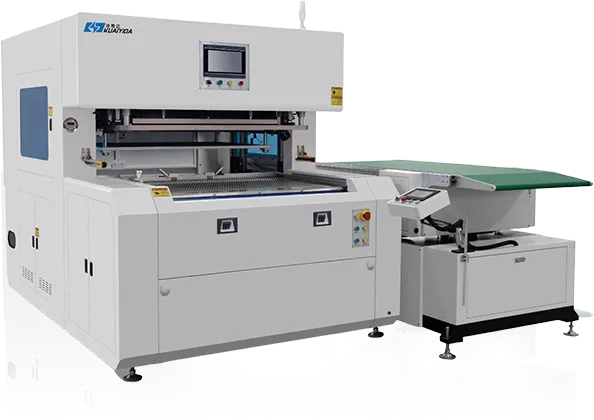
|
Core Competency |
Manual feeding + automatic waste removal |
|
Suitable Scenario |
Irregularly shaped products |
|
Minimum Product Size |
35X35mm |
|
Waste Removal Speed |
1-5 times/min |
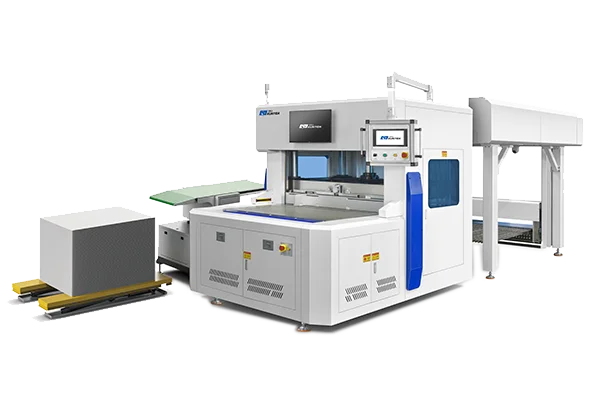
| Core Competency | Auto Collection |
| Suitable Scenario | Packaging |
| Minimum Product Size | 100*80mm |
| Waste Removal Speed | 2-3 times/min |

| Core Competency | Economical waste disposal solutions |
| Suitable Scenario | Basic packaging box |
| Minimum Product Size | 35X35mm |
| Waste Removal Speed | 1-5 times/min |
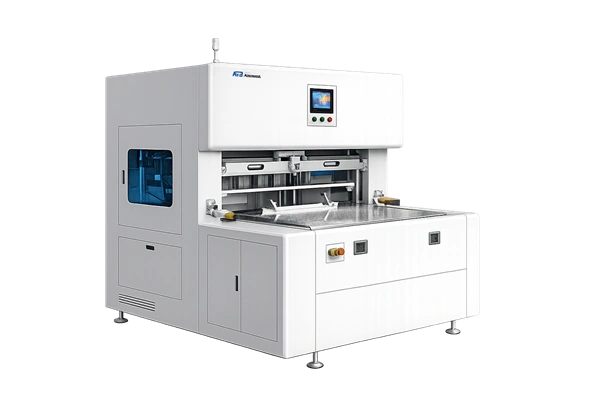
| Core Competency | waste removal |
| Suitable Scenario | Packaging |
| Minimum Product Size | 35X35mm |
| Waste Removal Speed | 1-5 times/min |



 English
 Español