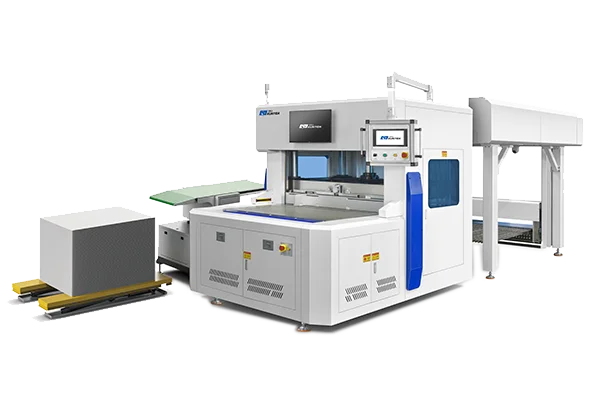
In the fast-paced world of packaging and printing, the final step of removing die-cut waste—often referred to as "skeleton" waste—can be a silent bottleneck. If you’ve ever watched skilled operators manually pick out tiny pieces of cardboard from intricate die-cut sheets, you know how labor-intensive and risky this process can be. The repetitive strain, the risk of damaging the final product, and the sheer time consumption often turn post-printing workflows into a logistical headache.
For plant managers and business owners, the goal is simple: clear the die-cut sheet quickly without damaging the product or injuring the operator. But with so many configurations on the market, how do you identify the setup that actually fits your production line? Let’s break down the core considerations to help you make an informed decision.
Before diving into hardware specifications, it’s crucial to analyze what "waste" means for your specific operation. Are you dealing with high-volume, repetitive jobs like pharmaceutical boxes, or are you handling intricate, custom-shaped packaging with tight tolerances?
The primary challenge most facilities face is the misalignment between the stripping process and the preceding die-cutting speed. If your stripping process takes twice as long as your cutting process, you are essentially halving your throughput. This is where the transition from manual to automated solutions becomes a critical business decision rather than just an operational upgrade.
When evaluating solutions to optimize this stage, the market generally offers three distinct levels of mechanization. Understanding these will help you determine where your current needs lie.
This is the traditional method, relying on operator skill. While it offers flexibility for extremely low volumes or unique custom jobs, it is fraught with inefficiencies.
Pros: Low initial investment; adaptable to any shape.
Cons: High labor costs; risk of repetitive strain injuries (RSI); inconsistent output speed; potential for product damage if the operator is fatigued.
These are standalone units that use a press mechanism to push waste out of the sheet. They are a step up from manual labor, offering consistent pressure.
Pros: Better consistency than manual labor; reasonable price point.
Cons: Requires a dedicated operator; still relatively slow; the loading and unloading process can create a bottleneck in a high-speed line.
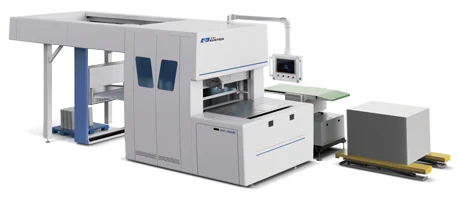
For facilities aiming for lights-out manufacturing or high throughput, integrating the stripping process directly into the production line is the ideal. These systems are designed to match the speed of high-performance die-cutters, handling sheets automatically from feed to stack.
Pros: Maximizes throughput; reduces labor dependency; consistent quality; enhanced safety.
Cons: Higher upfront investment; requires precise setup for different sheet sizes.
If you are leaning toward mechanization, whether standalone or integrated, there are specific technical aspects that separate a good machine from a great one.
Precision Adjustment Mechanisms
The ability to fine-tune the stripping tools is vital. Look for systems that offer micro-adjustments. If the setup process takes hours, you lose the efficiency gains you were hoping for. Modern stripping solutions utilize screw-driven or servo-controlled adjustments that allow operators to switch between jobs in minutes rather than hours, ensuring that the stripping pins align perfectly with the die-cut waste areas without touching the product.
Modular Tooling
Flexibility is key in modern packaging. A rigid system that works perfectly for one box type may fail miserably on another. The best solutions feature modular tooling—specifically upper and lower stripping pins and comb tools—that can be reconfigured based on the sheet layout. This modularity allows you to handle everything from simple rectangular waste to complex irregular shapes without needing a completely different machine.
Safety Integration
Never underestimate the safety aspect. In manual and semi-automatic setups, operators often have to reach into the danger zone. Advanced systems utilize light curtains, dual-hand controls, or fully enclosed guarding. Furthermore, in-line systems that interface directly with existing die-cutters must have synchronized safety protocols to prevent accidental starts.
To decide which direction to take, ask yourself these three questions:
What is your daily volume? If you process over 10,000 sheets a day, manual stripping is likely costing you more than a machine payment in labor alone.
What is your staff turnover? Skilled manual strippers are hard to find and retain. Reducing dependency on niche manual skills can make your operations more resilient.
How complex is your product mix? High mix/low volume favors modular tooling; low mix/high volume favors dedicated high-speed automation.
If you find that your current stripping method is the bottleneck preventing your die-cutting machine from running at full speed, it might be time to evaluate how a mechanized solution fits your floor plan. You can explore different configurations for integrating stripping into your existing workflow here.
Once you select your equipment, the journey doesn’t end. To ensure longevity, pay attention to the structural rigidity of the frame. Stripping generates significant impact forces; a frame that is not robust will eventually lose alignment, leading to inconsistent stripping and increased wear on tooling.
Additionally, consider the availability of spare parts and tooling. A machine is only as good as the support behind it. Opt for solutions where common wear items—like stripping pins, rubbers, and bushings—are standardized and easy to replace. This minimizes downtime when maintenance is required.
The transition from manual waste removal to a structured mechanical solution is a significant step toward operational efficiency. By understanding the trade-offs between manual, semi-automatic, and fully integrated systems, you can select a path that not only clears waste faster but also improves workplace safety and product quality.
For businesses looking to streamline their post-press department with reliable, high-speed automation, reviewing the specifications of advanced stripping solutions can provide a clearer picture of what’s possible. Whether you need a compact unit for a small shop or a heavy-duty integrated line for mass production, the right equipment should act as a force multiplier for your team.
Disclaimer: The information provided in this article is for general informational purposes only. Always consult with a qualified engineer to ensure any new equipment meets your specific safety and operational requirements.
Free one-year warranty.
24/7 technical support.
Efficient supply of original spare parts.


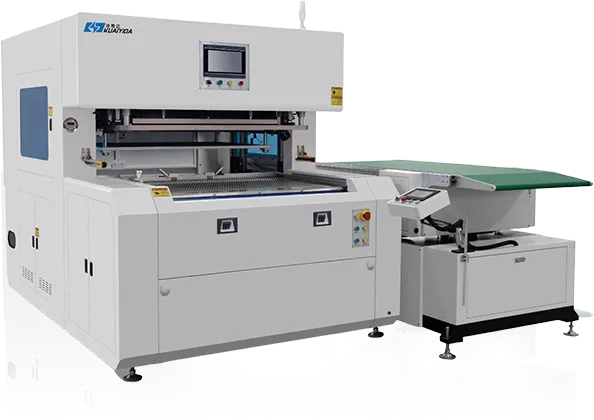
|
Core Competency |
Manual feeding + automatic waste removal |
|
Suitable Scenario |
Irregularly shaped products |
|
Minimum Product Size |
35X35mm |
|
Waste Removal Speed |
1-5 times/min |

| Core Competency | Auto Collection |
| Suitable Scenario | Packaging |
| Minimum Product Size | 100*80mm |
| Waste Removal Speed | 2-3 times/min |

| Core Competency | Economical waste disposal solutions |
| Suitable Scenario | Basic packaging box |
| Minimum Product Size | 35X35mm |
| Waste Removal Speed | 1-5 times/min |
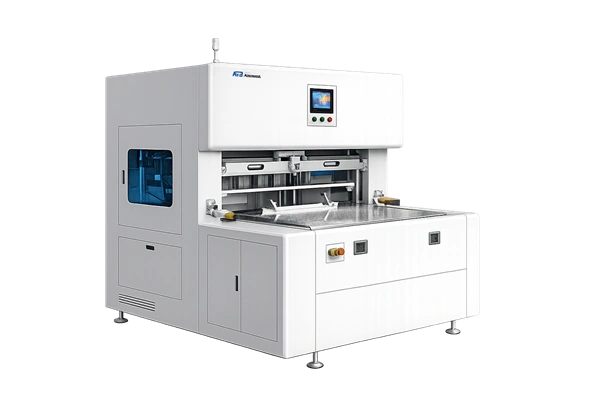
| Core Competency | waste removal |
| Suitable Scenario | Packaging |
| Minimum Product Size | 35X35mm |
| Waste Removal Speed | 1-5 times/min |



 English
 Español