If your goal is to reduce waste, improve cutting accuracy, and stabilize high-volume production, the most direct answer is this: upgrading to a modern Full Page Blanking Machine can significantly improve consistency while lowering manual intervention. In industries like packaging and printing, where tolerances are tight and margins even tighter, even a 1–2 mm deviation can translate into thousands in losses over time. The right system doesn’t just cut—it standardizes outcomes.
Many buyers assume their current setup is “good enough”—until defects start showing up in batches. The real issue often lies in process inconsistency rather than operator error.
Typical pain points include:
In a real packaging plant I visited last year, operators were compensating for machine drift manually every 40 minutes. That’s not a labor issue—that’s a system limitation.
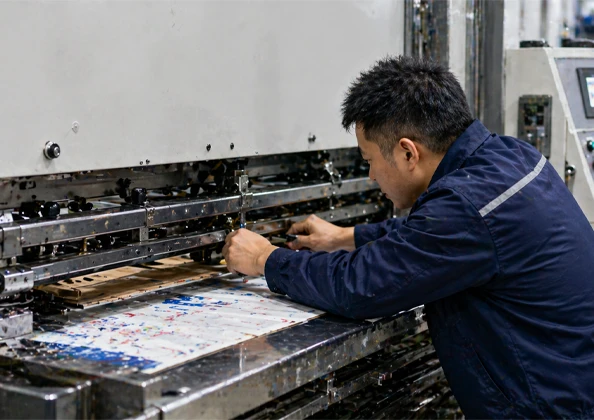
Beyond specs and brochures, decision-makers are usually solving three practical problems:
Short runs and frequent changeovers demand flexible sheet-fed blanking solutions.
With rising labor costs, machines must offer automated stripping and stacking systems.
Consistency over long production cycles matters more than peak speed.
According to industry reports from organizations like PMMI (Packaging Machinery Manufacturers Institute), manufacturers increasingly prioritize automation integration and repeatability over raw throughput.
Older systems or semi-automatic setups often rely on:
This leads to bottlenecks, especially in:
In contrast, integrated systems eliminate multiple handoffs—reducing both time and error accumulation.
This is where newer solutions—like an Automatic Full Page Blanking & Stripping Machine—start to change the equation.
Instead of treating blanking and stripping as separate steps, these machines combine:
The result? Fewer touchpoints, fewer errors.
If you’re evaluating options, you can explore application scenarios to see how integrated systems perform in real production environments.
Let’s break down how different solutions stack up:
From a long-term ROI perspective, integrated systems tend to outperform when job variability and precision requirements increase simultaneously.
From a practical standpoint, KUAIYIDA’s approach focuses less on flashy features and more on process reliability.
What stands out in real use cases:
For buyers looking deeper into configuration details, it’s worth taking a closer look to get selection guidance based on your production setup.
Imagine a mid-sized folding carton manufacturer handling pharmaceutical packaging:
Switching to a system that integrates blanking and stripping reduced:
In such scenarios, the value isn’t just speed—it’s predictability.
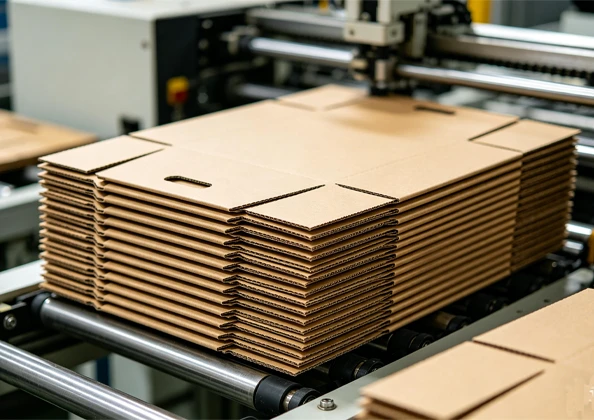
Many buyers initially search for better machines. What they actually need is a more stable production system.
A Full Page Blanking Machine—especially when combined with automated stripping—should be evaluated not as a standalone asset, but as part of a broader workflow:
If those answers are clear, the investment usually justifies itself faster than expected.
Free one-year warranty.
24/7 technical support.
Efficient supply of original spare parts.


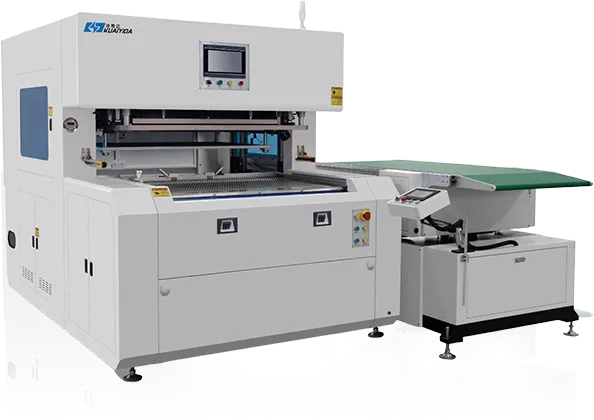
|
Core Competency |
Manual feeding + automatic waste removal |
|
Suitable Scenario |
Irregularly shaped products |
|
Minimum Product Size |
35X35mm |
|
Waste Removal Speed |
1-5 times/min |
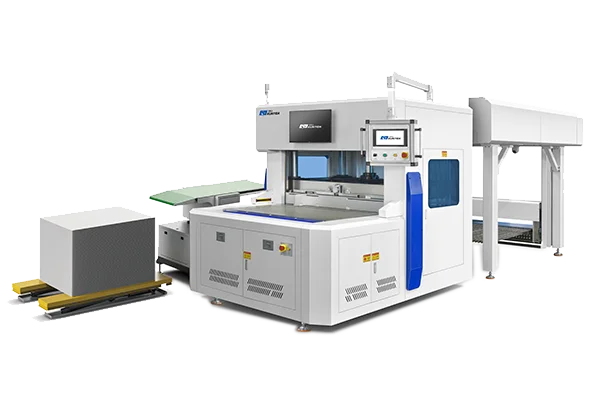
| Core Competency | Auto Collection |
| Suitable Scenario | Packaging |
| Minimum Product Size | 100*80mm |
| Waste Removal Speed | 2-3 times/min |

| Core Competency | Economical waste disposal solutions |
| Suitable Scenario | Basic packaging box |
| Minimum Product Size | 35X35mm |
| Waste Removal Speed | 1-5 times/min |
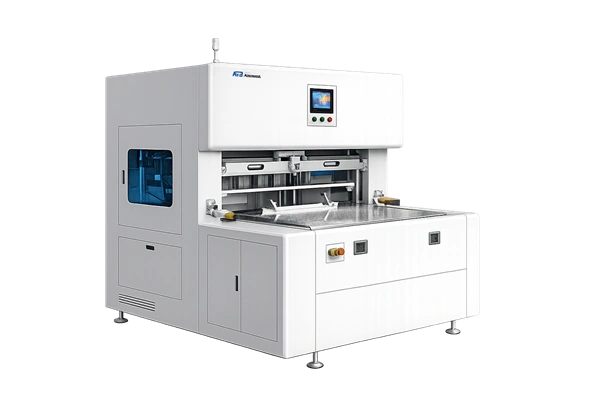
| Core Competency | waste removal |
| Suitable Scenario | Packaging |
| Minimum Product Size | 35X35mm |
| Waste Removal Speed | 1-5 times/min |

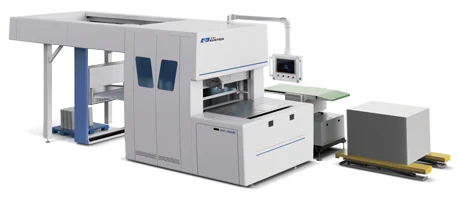


 English
 Español