The short answer? Automation wins—but not for the reasons most assume. While many plant managers immediately think about labor reduction, the real victory comes from something quieter: eliminating the hidden friction that manual methods inject into your entire production flow. A single bottleneck at the stripping stage can idle a $500,000 die-cutter, turning a seemingly "cheap" manual process into an expensive liability. According to EPA data, waste management can eat up a staggering 20% of operating expenses in packaging-heavy industries. That’s money leaking from a stage most operations treat as an afterthought.
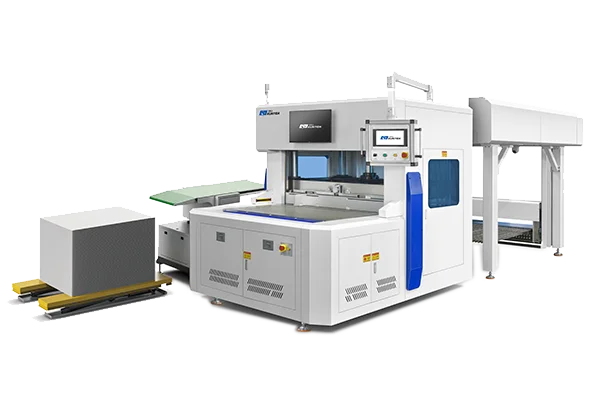
You don’t start with automation. You start with a worker, a hand tool, and a pile of die-cut sheets. When volumes are low, this works fine. But here’s the catch: demand rarely stays low. As order volumes climb, the waste stripping bottleneck tightens. The math is brutal. A typical die-cutting machine can output 2,000 sheets per hour, yet a manual operator struggles to clear just 400–500 sheets in that same timeframe. The gap creates a "waste tsunami"—finished sheets piling up, waiting for hours, delaying shipments, and frustrating customers.
Beyond throughput, there’s the toll on people. Repetitive motion injuries, back strain, and exposure to sharp waste edges are not hypothetical risks. Studies on materials recycling facilities confirm that manual separation, while sometimes improving material quality, significantly increases operator hazards—from cuts and sanitary risks to musculoskeletal injuries from repetitive handling. The US Bureau of Labor Statistics further notes that labor accounts for roughly 35% of total costs in print production environments, and a significant chunk of that goes to non-value-added handling like stripping. Those are dollars spent on breaking down waste, not on making product.
Manual stripping also carries quality inconsistency as a silent partner. Worker fatigue leads to torn edges, bent cartons, and scratched surfaces. In one documented case, a packaging facility's rejection rate due to stripping-related defects hovered at 2.5%—far above the industry benchmark. That’s not just waste; that’s rework, refunds, and damaged customer trust.
Then there’s the floor space hemorrhage. Pallets of die-cut sheets awaiting stripping consume valuable real estate. With warehouse space averaging nearly $9 per square foot in some US markets, that backlog is literally rent you’re paying for trash. Every square foot occupied by waste-in-waiting is a square foot not storing finished inventory or enabling smoother logistics.
At a certain volume threshold—usually when you’re processing more than 10,000 sheets per shift—the conversation shifts. You stop asking "Can we afford automation?" and start asking "Can we afford not to?" This is where the material separation efficiency gap becomes undeniable. Automated systems don’t get tired. They don’t take coffee breaks. They don’t call in sick on Monday morning. They run with a consistency that transforms the stripping stage from a bottleneck into a high-speed waste processing asset.
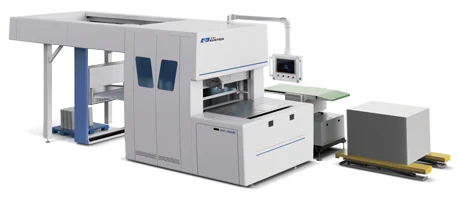
Consider this: an automatic waste stripper operated by a single person can deliver efficiency four times higher than traditional manual methods. In some configurations, one worker can even manage two or three machines simultaneously, maximizing throughput without multiplying headcount. The productivity leap isn’t incremental—it’s structural.
For facilities not yet ready to go fully hands-off, semi-automatic waste removal machines offer a pragmatic middle ground. These systems handle material feeding, waste stripping, and collection into designated containers automatically, while operators focus on loading and monitoring. It’s a stepping stone that cuts labor strain without requiring a complete production line overhaul.
When manufacturers transition to automated stripping, the improvements tend to follow a predictable pattern. The damage rate from stripping-related defects often drops dramatically—from around 2.5% to as low as 0.5% in some implementations.. That’s a straight lift in yield, directly hitting the bottom line. Worker injuries related to manual stripping have been documented to fall to zero post-automation, eliminating not just human suffering but also workers' compensation claims and compliance headaches
And let’s talk about the return on investment. While figures vary by volume and equipment type, some facilities report ROI timelines under 12 months, driven by reduced labor spend, lower defect rates, and faster throughput. In one case, an automated baling system produced three bales per hour with just two staff members—compared to over an hour for a single bale manually—cutting labor hours and increasing material value per shipment.
From a regulatory standpoint, automation also simplifies life. OSHA requires operators handling heavy machinery to be properly trained and certified. With manual stripping, you’re managing a dispersed set of risks—ergonomic, repetitive motion, laceration hazards—across multiple workers. With an automated system, the risk profile centralizes around machine guarding and operational protocols, which are far easier to standardize, monitor, and audit. A cleaner, more predictable safety record isn’t just good for workers; it’s good for insurance premiums and regulatory peace of mind.
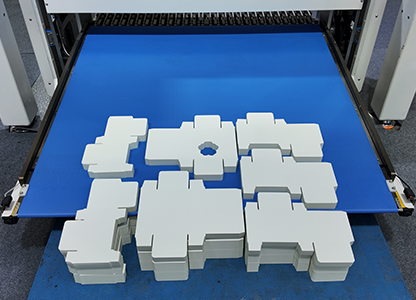
So which approach actually wins? The honest answer: it depends entirely on your volume, product mix, and tolerance for variability. For low-volume, high-mix runs with complex carton geometries, flexible manual stripping may still hold its ground—especially if labor costs in your region are low and quality inspection is baked into the process. But for any facility processing consistent volumes above a few thousand sheets per shift, the automated waste stripping systems available today offer a compelling value proposition.
If you’re evaluating options, explore the specific configurations here to see what aligns with your throughput targets and floor layout. The right choice isn’t about choosing "manual" or "automated" as a religion—it’s about matching the technology to the reality of your production rhythm.
The broader packaging waste management market is already signaling the direction. Valued at approximately $96.53 billion in 2025, it’s projected to reach $152.44 billion by 2034, growing at a CAGR of 5.26%. That growth is fueled by exactly the pressures outlined here: labor costs, regulatory demands, and the sheer economics of waste. Leading players like Tetra Pak are already deploying AI-powered sorting at their material recovery facilities, using computer vision and pneumatic separation to pull beverage cartons from mixed streams with accuracy that manual sorting simply cannot match.
You don’t need AI on your stripping line tomorrow. But the trajectory is clear. The facilities that treat packaging waste handling as a strategic lever—rather than a necessary evil—will be the ones running leaner, safer, and faster five years from now.
For a deeper look at how semi-automatic and fully automatic systems compare on your specific substrates, review the technical specifications here. And if you’re still running manual and wondering when to pull the trigger, request a consultation here to run the numbers on your unique waste stream. Sometimes the biggest savings aren’t in what you automate—but in finally admitting what manual handling is really costing you.
Free one-year warranty.
24/7 technical support.
Efficient supply of original spare parts.


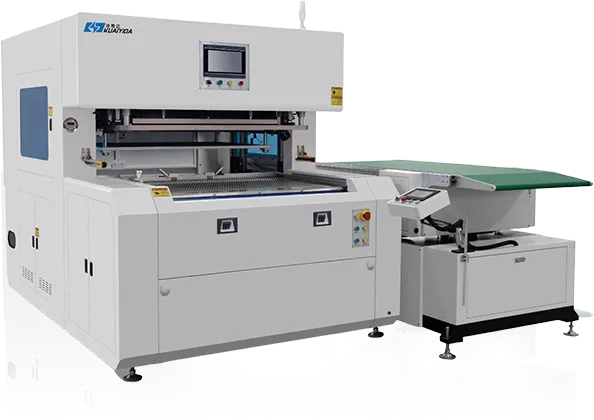
|
Core Competency |
Manual feeding + automatic waste removal |
|
Suitable Scenario |
Irregularly shaped products |
|
Minimum Product Size |
35X35mm |
|
Waste Removal Speed |
1-5 times/min |
| Core Competency | Auto Collection |
| Suitable Scenario | Packaging |
| Minimum Product Size | 100*80mm |
| Waste Removal Speed | 2-3 times/min |

| Core Competency | Economical waste disposal solutions |
| Suitable Scenario | Basic packaging box |
| Minimum Product Size | 35X35mm |
| Waste Removal Speed | 1-5 times/min |
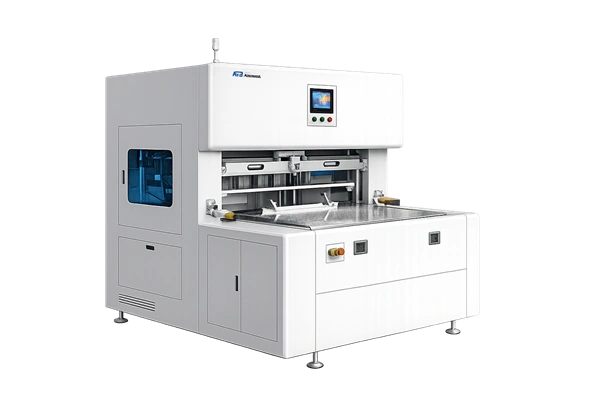
| Core Competency | waste removal |
| Suitable Scenario | Packaging |
| Minimum Product Size | 35X35mm |
| Waste Removal Speed | 1-5 times/min |



 English
 Español