For many carton and corrugated box manufacturers, the stripping process—separating the finished product from the surrounding waste matrix—is a persistent bottleneck. It’s a stage where speed often clashes with safety, and manual labor costs can quietly erode profit margins. The fundamental question facing plant managers isn’t whether to automate, but rather, how much automation is the right fit for their specific workflow.
The market typically offers two pathways: the familiar, operator-dependent semi-automatic waste stripping machine, and the fully automated, lights-out capable system. While both aim to solve the problem of skeleton waste removal, their impact on production lines, labor allocation, and long-term ROI could not be more different.
The most visible difference between semi- and fully automatic systems lies in how they interact with operators. A semi-automatic machine is essentially a powerful tool that amplifies human effort. The operator is central to the process—feeding sheets, activating the stripping mechanism, and removing the finished stacks.
This model offers flexibility. For plants with highly variable order sizes and complex die-cut shapes, an experienced operator can make split-second adjustments. However, this reliance on skill is a double-edged sword. According to industry feedback, operator fatigue is a leading cause of inconsistencies and micro-stops in this stage of production. As one plant supervisor noted, “By the third hour, you see the pace drop. It’s not the machine slowing down; it’s the hands.”
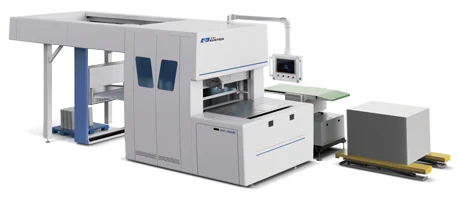
In contrast, a fully automatic system shifts the operator’s role from a physical participant to a production supervisor. Here, the operator’s primary tasks are loading the pile and monitoring the output. The machine handles the stripping, separation, and stacking autonomously. This isn't just about saving muscle; it’s about reallocating human capital from repetitive manual tasks to quality control and machine oversight.
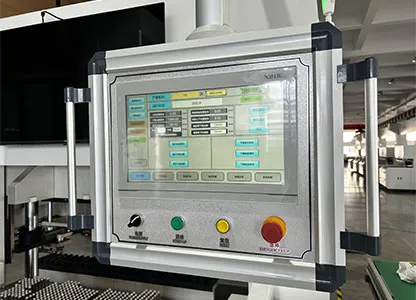
When evaluating throughput, it’s crucial to look beyond raw cycle speeds. While a highly skilled operator might achieve impressive instantaneous speeds on a semi-automatic machine, sustained throughput tells a different story.
Semi-automatic systems are subject to variable cycle times. The speed is capped by human reaction time, the need for safety precautions (since hands are often near the die area), and physical rest requirements. For a plant running high-volume, standardized orders, this variability introduces unpredictability into the production schedule.
Fully automatic systems excel in creating predictable, sustained throughput. The rhythm is mechanical, not biological. Once set up, a fully automatic blanking system maintains a consistent cycle, typically operating at speeds that are 60-100% faster than manual-dependent models for high-volume runs. This consistency allows for accurate production planning and just-in-time delivery commitments, a critical factor for suppliers serving large brand clients.
A common misconception is that full automation introduces complexity that requires a specialized engineer to manage. Modern fully automatic systems, however, are designed with user experience in mind. Features like servo-driven adjustments and recipe storage allow operators to change jobs in minutes rather than hours, with minimal error.
To understand the true cost structure, consider the long-term view:
| Feature | Semi-Automatic Systems | Fully Automatic Systems |
|---|---|---|
| Labor Dependency | High (1 operator per shift, often dedicated) | Low (1 operator can monitor multiple units) |
| Cycle Consistency | Variable (subject to human fatigue) | High (mechanical consistency) |
| Setup Time | Moderate (manual adjustments) | Low (automated adjustments via HMI) |
| Operator Skill | High skill required for efficiency | Skill focused on setup and monitoring |
| Initial Investment | Lower upfront cost | Higher upfront cost |
| Long-term ROI | Recurring labor costs; variable output | Reduced labor; predictable high output |
So, how do you decide which solution aligns with your production goals? The answer lies in analyzing your order mix and labor strategy.
If your operation handles a high mix of short-run, complex jobs where flexibility is the primary requirement, a semi-automatic machine can be a valuable tool. It allows skilled craftspeople to handle unique specifications without the overhead of complex programming. However, if you find that labor turnover is high, or that the stripping station is consistently the bottleneck preventing upstream machines (like die-cutters) from running at capacity, the limitations of semi-auto become glaring.
For manufacturers who have standardized their processes and are looking to scale production without proportionally scaling their headcount, the shift to a fully automated system is not just an equipment upgrade; it’s a strategic transformation.
If you are ready to explore how a fully integrated system can stabilize your production output and reduce your operational overhead, you can review the detailed specifications and configuration options available for modern automated stripping lines.
There is a financial nuance that often gets overlooked in the semi-auto vs. full-auto debate: the cost of waste and injury. Manual stripping, even with a semi-automatic press, exposes the material to potential handling damage—scuff marks, bent corners—that can lead to customer rejections. Furthermore, repetitive strain injuries remain a significant risk in plants relying on manual handling for stripping.
Fully automatic systems mitigate these risks entirely. By handling the product mechanically from the moment it enters the stripping unit until it exits as a finished stack, physical damage is virtually eliminated. The enclosed nature of the operation also enhances workplace safety, often leading to lower insurance premiums and a more stable workforce, factors that contribute to the total cost of ownership.
The choice between semi-automatic and fully automatic waste stripping comes down to where you see your plant in the next five years. The semi-auto route offers a lower entry price but ties your efficiency to the physical capabilities of your team. The full-auto route demands a higher initial investment but delivers the predictability, safety, and throughput necessary to compete in high-volume, margin-sensitive markets.
Ultimately, the goal is to ensure that your finishing department doesn’t limit your company’s growth. By matching the level of automation to your specific operational challenges, you transform waste stripping from a necessary chore into a streamlined, competitive advantage.
For those considering the leap to full automation, exploring a tailored solution can provide clarity. You can learn more about how these systems integrate with existing workflows and what the potential ROI looks like for your specific order profile.
Free one-year warranty.
24/7 technical support.
Efficient supply of original spare parts.


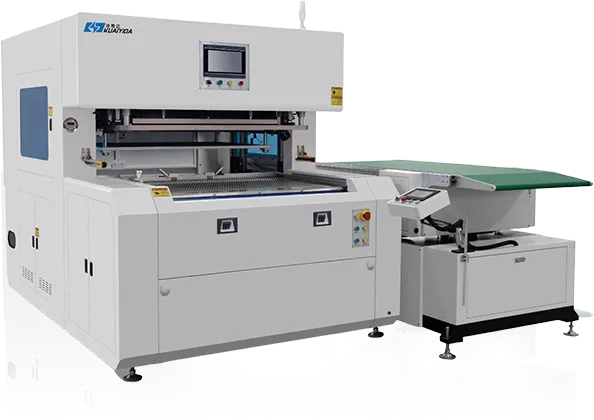
|
Core Competency |
Manual feeding + automatic waste removal |
|
Suitable Scenario |
Irregularly shaped products |
|
Minimum Product Size |
35X35mm |
|
Waste Removal Speed |
1-5 times/min |
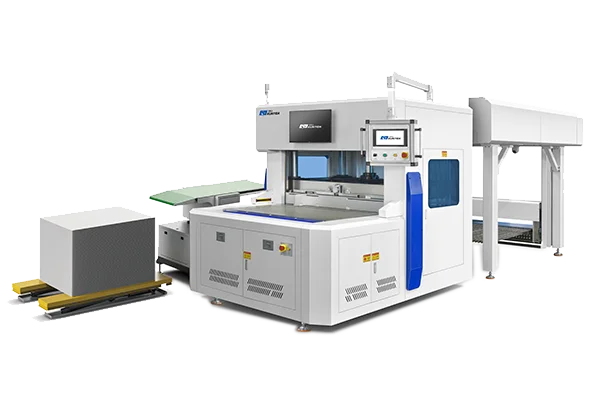
| Core Competency | Auto Collection |
| Suitable Scenario | Packaging |
| Minimum Product Size | 100*80mm |
| Waste Removal Speed | 2-3 times/min |

| Core Competency | Economical waste disposal solutions |
| Suitable Scenario | Basic packaging box |
| Minimum Product Size | 35X35mm |
| Waste Removal Speed | 1-5 times/min |
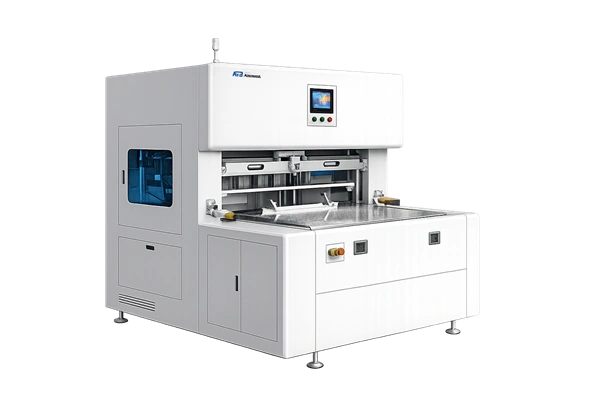
| Core Competency | waste removal |
| Suitable Scenario | Packaging |
| Minimum Product Size | 35X35mm |
| Waste Removal Speed | 1-5 times/min |



 English
 Español