Every packaging converter knows the sound: the rhythmic thump of a die-cutting press, followed by the frustrated sigh of an operator untangling a nest of waste matrix that should have stripped clean. It’s 3 a.m. on a Tuesday, and a job that was on track to ship by sunrise is now stalled because the intricate cutouts on a premium spirit carton simply won’t release. You’ve tried adjusting the pins, tweaking the make-ready, even changing rubber durometer—but the waste keeps breaking, and the blanks keep jamming.
This isn’t just a nuisance. Waste-handling failures are a quiet profit killer. They chew up 8–15% of scheduled run time on complex layouts, increase blank damage by forcing manual intervention, and elevate repetitive strain injuries on the shop floor. According to a 2023 Smithers report on package printing productivity, unplanned downtime related to stripping and delivery accounts for nearly one in every five hours of lost production on conventional flatbed lines. The root cause? Most waste systems in use today were designed for simpler geometries and stiffer substrates. When faced with thin, elastic films, micro-flutes, or heavily nested cutouts, those systems reach their mechanical limit. The good news is that a quiet revolution in automation has changed what’s possible. If you are struggling with jobs that seem impossible to strip in one pass, there is a smarter way—and it begins with understanding why traditional methods fail, and how integrated full-sheet waste handling technology reshapes the equation.
Most converters treat waste stripping as an afterthought—something the stripping board and a few pins should handle. But waste isn’t just “leftover material”; it’s a dynamic structural problem. Three factors turn a routine job into a nightmare:
1. Substrate Memory and Elastic Snap-Back
Thin PET, shrink films, and PE-coated boards stretch during die-cutting. The moment the cutting die retracts, the material tries to return to its original shape, pinching the waste between the blank edges. This “snap-back” can increase the force needed to separate waste by 40-60% compared to static calculations. Traditional upper pin stripping, which relies on a fixed penetration depth, either misses the waste entirely or drives it back into the sheet.
2. Complex Nesting and Narrow Bridges
To reduce material cost, CAD engineers push nesting density to the limit—sometimes leaving bridges as narrow as 1.5 mm between cavities. When stripping, the waste grid behaves like a chain: one weak link, and the entire matrix tears apart. Manual interventions then require operators to stop the press and pick fragments from the cutting die, a cycle that repeats every few hundred sheets.
3. Micro-Flute Collapse
Corrugated converters embracing E-, F-, and N-flute for shelf-ready packaging face a different beast. The flute tips can crush under conventional stripping pins, delaminating the liner and scrapping the blank. Replacing pins with full-width stripping boards helps, but drastically increases make-ready time.
These are not problems you can solve with a bigger hammer. They require a systematic rethinking of how waste is removed and how blanks are separated after die-cutting. That’s precisely where modern automation has made its biggest leap.
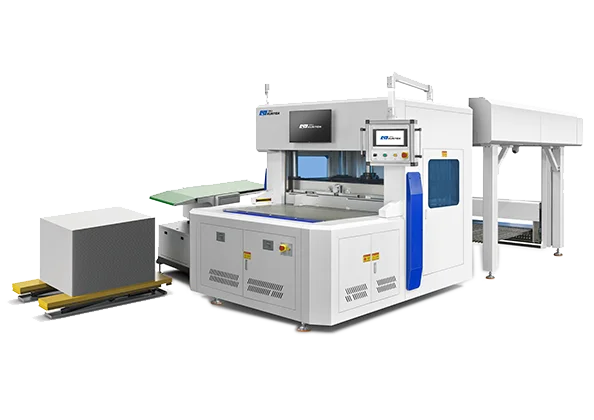
Rather than forcing a single stripping action onto every job, advanced systems now decouple the process into intelligent, adaptable stages. The result is a dramatic reduction in stoppages and a wider window of runnable substrates. Below is a breakdown of what’s changing under the hood.
| Pain Point | Traditional Approach | Modern Automated Solution |
| Elastic snap-back on films | Fixed pin height; mechanical stripping | Servo-adjustable stripping profiles that follow substrate rebound timing |
| Narrow, delicate bridges | Single-row upper pins; passive female board | Programmable multi-stage stripping pins with pattern-specific tooling |
| Micro-flute crush | High-pressure pin impact; full-width boards | Dynamic pin-to-blank clearance control; dedicated blanking tool with soft-touch inserts |
| Frequent make-ready for short runs | Manual pin setting and board cutting | Recipe-driven servo positioning; quick-change stripping chases compatible with multiple layouts |
The heart of this shift is servo-driven profiling. Instead of a mechanical cam that dictates a single stripping curve, modern systems use individually controlled motors on stripping and blanking stations. The machine knows—from the job recipe—exactly where the front edge of each sheet is, where the waste matrix weak points lie, and what peel angle will release the substrate without rupture. For a tuck-top carton with six cutouts and a tear-strip perforation, the stripping pins can engage sequentially: front waste first, center cutouts next, perimeter last. This sequencing prevents the entire matrix from being pulled at once, preserving narrow bridges.
Immediately downstream, the blanking function—separating individual finished blanks from the main sheet—gets equal attention. A modular in-line blanking system with independent die change can handle full-size sheets without sacrificing the precision needed for small-format folding cartons. The key is adaptability: the same unit that blanks a 1060 mm sheet of pharmaceutical leaflets at 8000 sheets per hour can be reconfigured within minutes to process a 740 mm sheet of display trays, because the blanking grid is comprised of adjustable segments rather than a monolithic tool. This kind of flexibility transforms short-run economics, erasing the traditional trade-off between automation and versatility.
If there is one operational data point that convinces plant managers, it’s make-ready time. A survey by the UK’s BPIF (British Printing Industries Federation) noted that the average stripping and blanking make-ready for a complex job on a conventional line clocks in at 52 minutes. For a shop running six complex jobs per week, that’s over five hours of press downtime spent solely on setting pins, changing boards, and trial-and-error stripping.
Automated recipe management changes the math. Once a job has been run and its parameters saved—servo positions, blanking grid layout, stripping pin assignment—repeat setup takes under 10 minutes. For new jobs, the system can import die lines directly from CAD files to generate a starting recipe. An experienced operator fine-tunes it in a few sheets rather than a few hundred. The learning curve flattens: younger operators who grew up with touchscreens find the recipe-driven interface intuitive, reducing the reliance on senior die-cutters nearing retirement.
One pharmaceutical packaging converter in Southeast Asia shared (anonymously) that transitioning to an automated blanking line reduced their average make-ready from 45 minutes to 12 minutes, while cutting waste matrix breakage events by 78%. The machine paid for itself in under 14 months through increased net output and reduced overtime. Stories like these are becoming common, not because the technology is magical, but because it finally addresses the physical root causes instead of patching symptoms.
Adopting this level of automation isn’t just about buying a machine. It’s about future-proofing your operation against substrate trends that are already visible: thinner, lighter, more recycled-content materials. In-line waste handling that copes with a 250 gsm CCNB today might struggle with the 180 gsm lightweight liner being specified for your next big contract. If you are evaluating equipment, here are five questions to ask the manufacturer:
Can the stripping and blanking stations store multiple job recipes, and do they integrate with my upstream die-cutter’s CAD workflow?
What is the minimum bridge width the system can strip without manual intervention, demonstrated on both paperboard and film?
How are stripped waste and blanked products transported away from the cutting zone to prevent re-entrainment?
What quick-change features reduce make-ready when switching between full-sheet blanking and standard stripping-only runs?
Is there a clear upgrade path from the base configuration to higher levels of automation, or will I hit a dead end?
These questions shift the conversation from cost-per-sheet to value-per-sheet over a 7–10 year asset lifespan. That’s the right metric. A machine that struggles on 15% of your jobs has a hidden cost far beyond its price tag.
To get a real-world sense of what a clean transition looks like, explore how an integrated full-sheet blanking solution is designed for fast job changeover and minimal waste interruption. Real case data often reveals more than any spec sheet can.
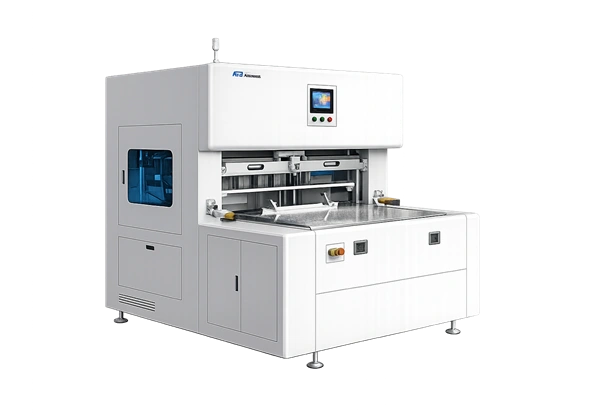
Any capital equipment decision carries risk, so verifying reliability claims is essential. Reputable suppliers will provide references for installations that match your substrate mix. Look for evidence of compliance with machinery safety standards such as ISO 13849-1 for control systems and ISO 12648 for printing press safety. Ask about service response times, remote diagnostics capability, and the availability of critical spares locally.
One subtle but telling indicator of robust engineering is the design of the waste matrix conveyor. In an auto stripping & blanking machine, stripped waste must exit the cutting zone swiftly and without jamming. Belt-less vacuum conveyors, large-diameter rollers with non-stick coatings, and intelligent air-blast assist are features that signal the manufacturer has thought deeply about the messy reality of production, not just the clean demo floor.
Equally important is operator acceptance. If the human-machine interface is cryptic, the best automation will be underused. Look for visual job previews that show pin placement and blanking grid configuration. Operators should be able to make micro-adjustments on the fly without digging through menus. When the workforce trusts the machine, they push it to its potential rather than working around it.
Complex die-cut waste problems don’t just eat away at margins; they erode the creative confidence of designers and brand owners. When a converter says “we can’t run that shape,” innovation stops. With modern servo-driven stripping and blanking, those boundaries recede. Jobs that used to require two passes, excessive manual picking, or costly off-line blanking can now flow in one seamless operation.
That flow isn’t magic. It’s the result of engineering that treats waste removal not as a secondary task, but as a critical, intelligent subsystem of the die-cutting process. From the moment the sheet leaves the cutting die to the moment the finished blanks hit the delivery pile, every step is controlled, profiled, and verified. The result is higher output, fewer overtime hours, and a plant that says “yes” more often than “no.”
If you are looking to move beyond the limits of traditional waste handling and want to see what’s achievable with today’s technology, Kuaiyida’s full-page blanking solutions offer a practical entry point. The team can walk you through specific configurations for your board grade range, run length mix, and layout complexity—without glossy brochure jargon. After all, the best machine is the one that quietly, reliably does the job while you focus on growing your business.
Free one-year warranty.
24/7 technical support.
Efficient supply of original spare parts.


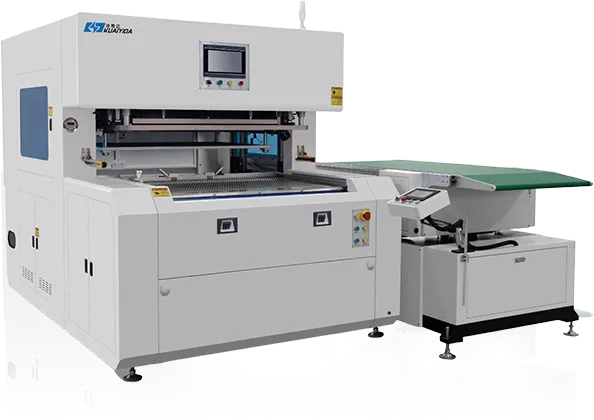
|
Core Competency |
Manual feeding + automatic waste removal |
|
Suitable Scenario |
Irregularly shaped products |
|
Minimum Product Size |
35X35mm |
|
Waste Removal Speed |
1-5 times/min |
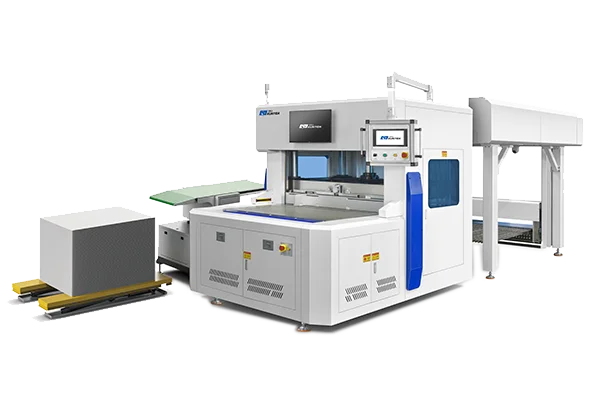
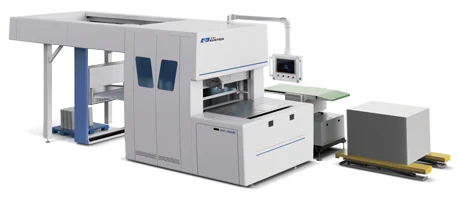
| Core Competency | Auto Collection |
| Suitable Scenario | Packaging |
| Minimum Product Size | 100*80mm |
| Waste Removal Speed | 2-3 times/min |

| Core Competency | Economical waste disposal solutions |
| Suitable Scenario | Basic packaging box |
| Minimum Product Size | 35X35mm |
| Waste Removal Speed | 1-5 times/min |
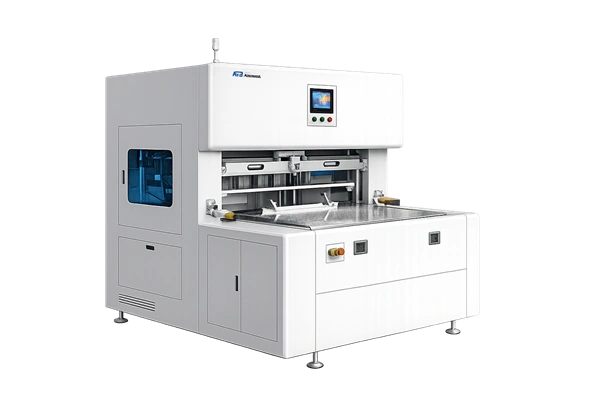
| Core Competency | waste removal |
| Suitable Scenario | Packaging |
| Minimum Product Size | 35X35mm |
| Waste Removal Speed | 1-5 times/min |



 English
 Español