Every packaging converter knows the frustration: the die-cutter has done its job, but a finished sheet still looks like a half-finished puzzle. Blanks are loosely held in place by tiny nicks, waste edges cling stubbornly to critical creases, and somewhere between here and the gluing line, a pile of hand-sorted, half-broken cartons is waiting. It’s here, in the often-underestimated space between die-cutting and the next process, that the true bottleneck hides – and the right separation strategy makes all the difference.
For years, print finishing teams have debated the line between stripping and blanking. The terms are still used interchangeably on some shop floors, but confusing them can lead to damaged products, overstaffed sorting tables, and production targets that slip by the hour. If your team is already looking at ways to move away from manual breakout, you might want to look at how automated in-line sheet separating technologies are reshaping post-press layouts. But first, we need to draw the line clearly: what exactly separates stripping from blanking?
Stripping is the process of removing waste material – think trim edges, internal cutouts, and even stripping pins’ own support areas – from the die-cut sheet. It typically happens immediately after the cutting action, either in a dedicated stripping station on the press or as an off-line manual task. The goal is clean, waste-free sheets that still hold all the printed blanks in their original positions, held only by the remaining nicks.
The real-world experience: Ask any operator who has run a variety of board grades, and they’ll tell you stripping stability is a daily balancing act. Too little stripping pressure or poorly aligned stripping pins, and the waste doesn’t release. Too aggressive, and you rip the sheet or pull the blanks out of registration. Material variables like recycled content, moisture level, and flute direction turn this into a subtle craft. One operator I spoke with at a folding carton plant summed it up: “We don’t really dial in stripping; we learn how the board wants to be stripped today.”
Stripping remains essential for almost all die-cut jobs. When done well, it delivers stable sheets that can be stacked and moved to blanking with minimal risk. But even the best stripping does not separate individual cartons from each other – it just clears the waste around them. That’s where blanking enters the picture.
Blanking, in the post-press sense, is the operation that breaks the remaining nicks and delivers individual, separated blanks ready for gluing, wrapping, or further converting. Unlike stripping, blanking can occur at a separate station, often after the stripping section, using dedicated blanking tools that press the shaped blanks completely out of the sheet. The skeleton – the remaining scrap lattice – is ejected, and the finished products are shingled or stacked.
What makes this distinction critical is control. A stripping unit is not designed to separate products cleanly at speed; forcing it to do so results in excessive dust, edge damage, and inconsistent blank sizes. Blanking, however, is built exactly for that purpose. In a manual setup, operators break out the blanks by hand, which is slow and physically demanding. In automated environments, blanking tools push entire rows of blanks out of the sheet simultaneously – hence the need for a machine that can handle full rows in one motion. For high-volume packaging operations, an automatic row blanking machine often becomes the cornerstone of a truly unattended die-cutting line.
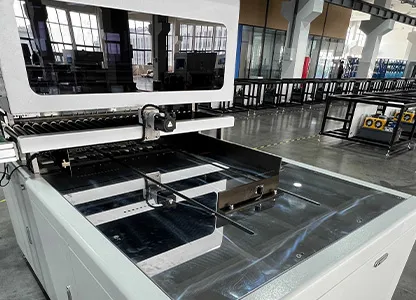
At this stage, the practical difference is already visible: stripping cleans the sheet, blanking creates the product. But to make a smart investment decision, we need to put them side by side.
The following table captures the core operational differences between the two processes. Use it as a checklist when evaluating your own production flow, especially if you suspect you are asking your stripping station to perform a blanking job it was never meant to handle.
| Dimension | Stripping | Blanking |
| Primary goal | Remove all waste and non-product areas | Separate individual blanks from the sheet skeleton |
| State of material after process | Sheet with blanks still attached by nicks | Loose, separated blanks collected in a shingle or stack |
| Tooling involved | Stripping pins, stripping boards, upper/lower frames | Blanking grids (upper tool) and blanking frame (lower), often customized per layout |
| Typical placement in line | Immediately after die-cutting, same press section | In a separate blanking station, or on a dedicated blanking machine |
| Speed dependency | Must match die-cutting speed, can reduce overall line speed if not optimized | Can run independently of die-cutter speed; dedicated units often run faster than the upstream press |
| Main risk | Incomplete waste removal, sheet damage, register disturbance | Blank edge damage, incomplete separation, skeleton breakage |
| Labor demand | Low if automated, but requires skilled setup | High if manual blanking; minimal if automated |
In my visits to converting plants, I’ve observed one recurring pattern: a facility invests heavily in a fast die-cutter, only to see its effective output limited by what happens after the stripping station. If your team is still spending hours manually breaking out blanks – or if you are using aggressive stripping settings to force product separation – you are fighting a problem that the correct process can solve entirely.
Here are three signs you may be overloading your stripping operation and could benefit from a clearer separation strategy:
Edge quality complaints from gluing. When blanks are forced out during stripping, the rough edges cause jams and poor glue adhesion downstream.
Unexplained micro-cracks near the nicks. Especially with solid board and heavy grammage, incorrect break-out stresses create hairline cracks that only show up after filling.
Operator fatigue and high turnover at the sorting table. Manual blanking is repetitive and physically hard; if you struggle to keep staff at this station, you have a workflow design issue, not a hiring problem.
When those signs multiply, it makes sense to look beyond the standard stripping setup. A dedicated blanking process not only protects the product but also decouples the separation speed from the die-cutter’s cadence. This is where you can explore modular blanking tools designed to integrate with your existing line and eliminate the handwork step completely.
The jump from a manual or hybrid setup to a fully automated blanking line can feel daunting. In practice, the integration is straightforward if you focus on a few key factors:
Blank layout compatibility. The blanking tool must match your existing die layout, but a well-designed frame system can accommodate multiple jobs with quick changeovers.
Material range. Whether you run thin litho stock, micro-flute corrugated, or heavy solid board, the separation technology needs to handle the spectrum without constant adjustment.
Downstream interface. How the blanking output connects to your gluer, folder, or packing line determines whether you truly get the time savings you’re after.
One approach that more mid- to high-volume converters are adopting is to deploy a purpose-built separation machine that processes a whole row of blanks in a single stroke. A row blanking machine configured for your sheet size and layout can take over from the stripping station and deliver ready-to-glue cartons at speeds that match or exceed the die-cutter’s rated output. Instead of fighting nicks, you calibrate them uniformly so that blanking becomes a predictable, repeatable mechanical step.
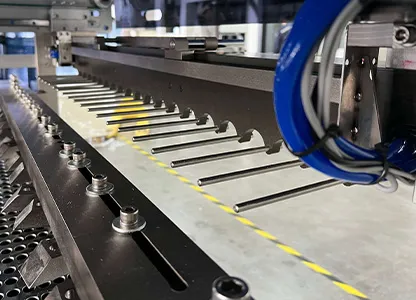
Let’s walk through a simplified business case. A plant producing 5 million cartons per month with two manual sorting tables may need 3-4 operators per shift just to break out blanks. With a fully automated inline blanking setup, those operators can be reassigned to higher-skill tasks, and the line can run near its theoretical maximum. Even without factoring in the reduction in product damage and the increase in gluer uptime, the labor savings alone often produce a payback period of under 18 months.
From a quality perspective, the improvement can be just as tangible. Consistent, controlled blank separation means identical blank dimensions, a crucial factor for pharmaceutical packaging, high-graphic cosmetics cartons, and any product destined for high-speed automatic filling lines. Industry guidelines such as the GMI packaging print quality standards increasingly expect exactly this level of consistency.
If you are considering an upgrade, a dedicated row blanking machine offers the repeatability and throughput that a combined stripping-only setup struggles to deliver.
Stripping and blanking are not interchangeable; they’re two distinct steps in a logical sequence. Misusing one for the other’s job creates hidden costs that get bigger the faster you try to run. Recognizing where your stripping process ends and blanking should begin is the first step toward a cleaner, faster converting line.
If your post-press team is looking to fully separate blanks without relying on handwork, it may be time to evaluate equipment that’s been purpose-built for the task. Kuaiyida’s post-press finishing solutions are engineered to handle a wide range of carton sizes and board grades with exact separation control, helping you bridge the gap between a die-cutter and the gluer without manual intervention. You can view Kuaiyida’s row blanking machine specifications and configuration options here.
ISO 12647-6: Graphic technology – Process control for the production of flexographic prints (relevant for color consistency in packaging).
GMI Packaging Print Quality Standards, v6.0.
Bobst “The Die-Cutting Process” technical documentation (general process reference).
Disclaimer: The efficiency improvements and payback examples mentioned are based on typical industry benchmarks; actual results may vary depending on job mix, material, and plant layout.
Free one-year warranty.
24/7 technical support.
Efficient supply of original spare parts.


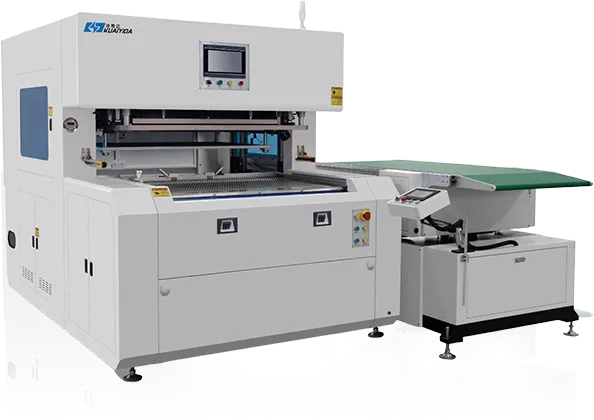
|
Core Competency |
Manual feeding + automatic waste removal |
|
Suitable Scenario |
Irregularly shaped products |
|
Minimum Product Size |
35X35mm |
|
Waste Removal Speed |
1-5 times/min |
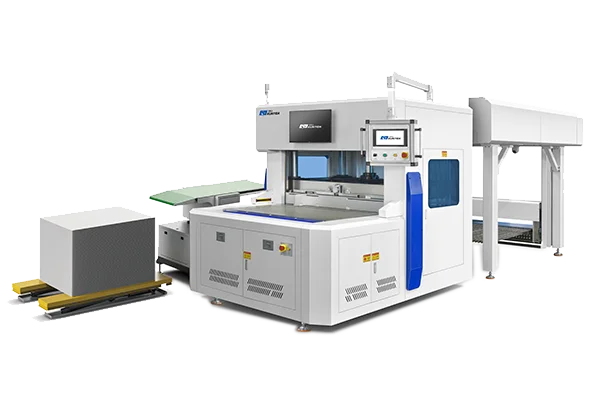
| Core Competency | Auto Collection |
| Suitable Scenario | Packaging |
| Minimum Product Size | 100*80mm |
| Waste Removal Speed | 2-3 times/min |

| Core Competency | Economical waste disposal solutions |
| Suitable Scenario | Basic packaging box |
| Minimum Product Size | 35X35mm |
| Waste Removal Speed | 1-5 times/min |
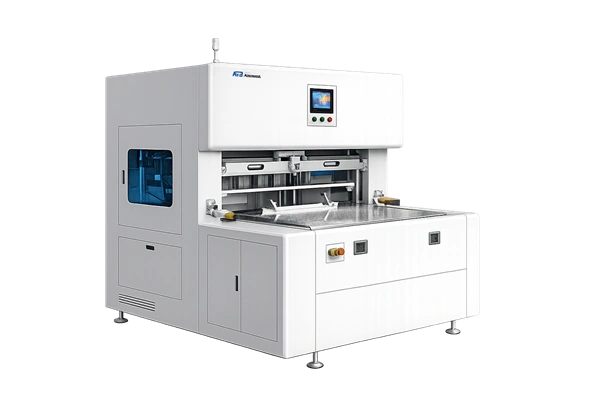
| Core Competency | waste removal |
| Suitable Scenario | Packaging |
| Minimum Product Size | 35X35mm |
| Waste Removal Speed | 1-5 times/min |



 English
 Español