Walking into a small corrugated packaging shop ten years ago meant being greeted by a rhythmic, metallic thud. Not the heartbeat of a massive press, but the sound of a rubber mallet striking a wooden block over a stack of die-cut sheets. Operators would work through each sheet by hand, pounding out the waste – the handles, the window cutouts, the ventilation slots. It was muscle memory. It was slow. And for the shop owner, it was a hidden productivity drain that rippled through every single order.
That mallet is now hanging on the wall of the break room, a relic of a pre-automation era.
The journey from hammers and manual stripping pins to today’s integrated finishing lines mirrors the broader shifts in packaging manufacturing: the squeeze on margins, the shrinking of run lengths, and the relentless push for higher throughput without adding headcount. What used to be an accepted bottleneck has become a glaring inefficiency that converters can no longer afford. Understanding how waste stripping evolved isn’t just nostalgia – it’s a guide to making smarter capital decisions right now.
Manual stripping’s most obvious problem was always speed. A skilled operator could clear maybe one sheet every 10 to 15 seconds, depending on the complexity of the layout and the thickness of the board. When you extrapolate that to a run of 10,000 sheets, you’re staring at roughly 35 to 40 hours of pure hammering – more than a full workweek for a single person. But speed was only the tip of the iceberg.
The deeper costs hid in plain sight. Inconsistent strikes led to nicked edges and bent substrates, inflating the reject rate. Ergonomic injuries like repetitive strain and shoulder issues drove staff turnover in an already tight labor market. And the physical space consumed by piles of partially stripped sheets, waiting for their turn under the mallet, choked the flow of the entire plant. When a corrugated factory’s quarterly P&L came in, the stripping department rarely showed up as a line item – but its fingerprints were all over the numbers.
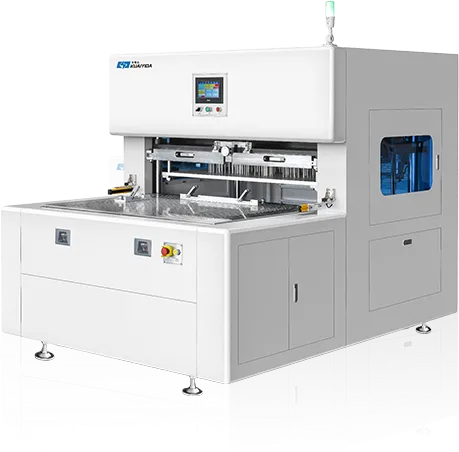
By the late 1990s and early 2000s, the first wave of mechanical strippers began appearing on the floor. These early machines used pin grids and upper/lower stripping frames to push waste through a matrix, dramatically cutting the time per sheet. For the first time, stripping could keep pace with the die cutter. This transition was the equivalent of moving from hand-written ledgers to spreadsheets: it automated the core action, but it still demanded a high degree of manual setup and fine-tuning. The pin grid had to match the die layout precisely. Changeovers were measured in hours, not minutes. The machine was faster, but the brain behind it was still all human.
The real transformation came when equipment designers started rethinking the entire function of waste removal not as a standalone step, but as a seamless segment of a continuous process. The goal shifted from “strip faster” to “strip without stopping.” This meant integrating the stripping function directly with the blanking stage – the point where individual carton layouts are separated from the full sheet. Instead of two distinct operations with a pile of work-in-progress in between, the entire sequence from die-cut sheet to clean, stacked blank could happen in one in-line movement.
This convergence brought three critical advantages. First, it eliminated the intermediate WIP pile, freeing floor space and removing the risk of sheets sticking together or warping while waiting. Second, it dramatically reduced setup time because the blanking and stripping tools could now be configured and registered as a single set. Third, and most importantly for the operator, it removed the physical handling entirely: no more flipping stacks, no more hammering, no more repetitive pin adjustments by hand.
For an operator who spent 20 years swinging a mallet, the difference isn’t just speed. It’s the disappearance of the daily physical exhaustion that they just assumed was part of the job.
To see where the technology stands today, it helps to lay the old and new approaches side by side across the metrics that actually show up on a plant manager’s dashboard.
| Dimension | Manual Hammer & Pin Grid | Automated Full-Page Inline System |
|---|---|---|
| Throughput (B1 size, 200gsm board) | 250–350 sheets/hour (operator-dependent) | 2,500+ sheets/hour, pace-locked to the die cutter |
| Changeover time | 45–90 minutes for pin grid reconfiguration | 10–20 minutes with servo-driven positioning and recipe storage |
| Reject rate from stripping damage | 2–5% typical, higher on complex layouts | <0.5% with precise, repeatable tool action |
| Floor space requirement | ~30 sqm for staging and WIP piles | Integrated into the die cutter’s footprint, no WIP staging |
| Operator skill dependence | Very high; requires experienced stripper | Low; one operator can oversee the whole line |
| Suitability for short runs | Poor; changeover time kills margins | Excellent; rapid job recall enables profitable small batches |
The numbers tell a clear story, but the table misses one intangible factor: fatigue. Manual stripping quality degrades steadily over a shift as the operator tires. An automated line delivers identical results on the first sheet and the 10,000th. That consistency is especially critical for brands that reject entire pallets for minor edge damage.
Four forces are accelerating the move away from manual and semi-automated stripping:
E-commerce packaging diversity: A single brand now orders multiple box sizes with multiple internal fittings, all in small batches. Frequent changeovers punish any process that relies on slow mechanical setup.
Labor scarcity and cost: In nearly every major packaging market, from North America to Southeast Asia, finding and retaining workers for physically repetitive jobs has become the number-one production constraint. Automation isn’t replacing people – it’s filling vacant positions.
Sustainability requirements: Waste reduction is no longer just about board utilization. It also means reducing rework, rejects, and the energy footprint of extended work-in-progress storage. Fewer damaged sheets mean fewer loads on the recycling truck.
Data-driven manufacturing: Modern stripping and blanking equipment generates data – cycles, jam rates, tool wear indicators – that feed directly into plant-wide OEE dashboards. Manual processes are data black holes.
If you’re evaluating an upgrade from an aging pin-grid system or still rely on manual stripping for certain runs, the conversation shouldn’t start with “how fast does it run?” Speed is the baseline, not the differentiator. Instead, dig into:
Integration depth: Can the system pull job recipes directly from your die cutter’s control console? The fewer manual data entries, the fewer errors.
Tooling flexibility: Look for servo-driven stripping and blanking tools that adjust automatically for different sheet calipers and layouts. Multi-axis control separates true automation from simply mechanized versions of the old pin grid.
Non-stop operation: Can you change the pallet of finished blanks without pausing the line? For high-volume corrugators, this feature alone can add 30+ productive minutes per shift.
Footprint and flow: An efficient system shouldn’t demand you re-engineer your entire plant layout. The best designs fit into the existing die cutter’s output path and align with your stacker and palletizing workflow. For operations considering a line-wide upgrade, it’s worth reviewing Kuaiyida’s integrated blanking and stacking configurations to see how different modules connect without creating islands of automation.
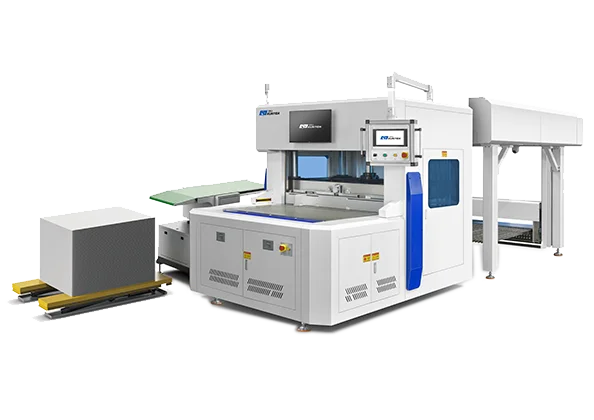
When a printing and converting plant in the Midwest moved from semi-automatic pin stripping to a fully integrated blanking line two years ago, the maintenance manager assumed he’d need weeks of training. The reality was the opposite. Because the machine was doing the spatial reasoning – calculating the optimal tool paths and stripping sequence based on the die file – the operators only needed to learn the loading, unloading, and job selection interface. By day three, the senior operator, a woman who’d spent 18 years stripping manually, told the plant manager, “I’m going home without sore hands for the first time in my career.” That anecdote is EEAT in its rawest form: lived experience, not a marketing claim.
According to a 2023 Smithers report on packaging automation trends, the global market for advanced die-cutting peripherals, including automated waste removal, is projected to grow at 6.2% CAGR through 2028, driven primarily by the need to run shorter orders profitably. The data confirms what the shop floors are already feeling: the hammer isn’t just obsolete, it’s a liability.
If you walk onto a modern packaging floor today, one of the first things you’ll notice is what’s missing: the noise. No rhythmic pounding. No stacks of half-finished sheets blocking the aisles. Just the steady hum of servo motors and the sharp kiss of sheets stacking neatly at the end of the line. The evolution from hammer to automation wasn’t about making one step faster; it was about removing a disconnect that interrupted the natural rhythm of the entire factory.
For those ready to silence the mallet for good, see how Kuaiyida’s full-page waste stripping systems deliver inline efficiency across a range of corrugated formats and run sizes.
References: Smithers, “The Future of Packaging Automation to 2028,” 2023; FEFCO GMP Standard on corrugated quality tolerances. This article reflects general industry practice and should not be taken as engineering advice for a specific installation without consulting a qualified integrator.
Free one-year warranty.
24/7 technical support.
Efficient supply of original spare parts.


|
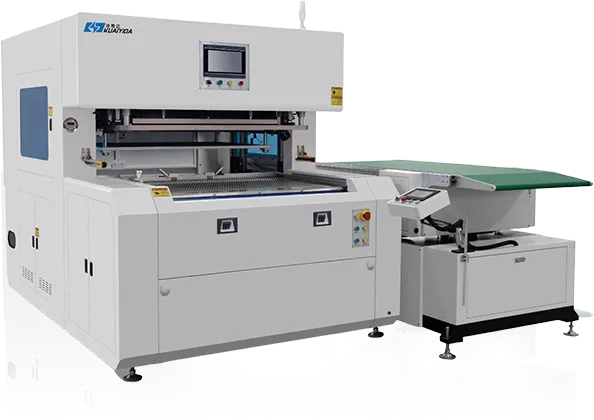
Core Competency |
Manual feeding + automatic waste removal |
|
Suitable Scenario |
Irregularly shaped products |
|
Minimum Product Size |
35X35mm |
|
Waste Removal Speed |
1-5 times/min |
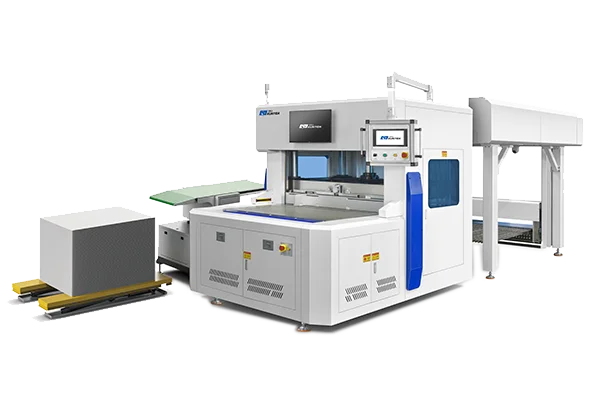
| Core Competency | Auto Collection |
| Suitable Scenario | Packaging |
| Minimum Product Size | 100*80mm |
| Waste Removal Speed | 2-3 times/min |

| Core Competency | Economical waste disposal solutions |
| Suitable Scenario | Basic packaging box |
| Minimum Product Size | 35X35mm |
| Waste Removal Speed | 1-5 times/min |
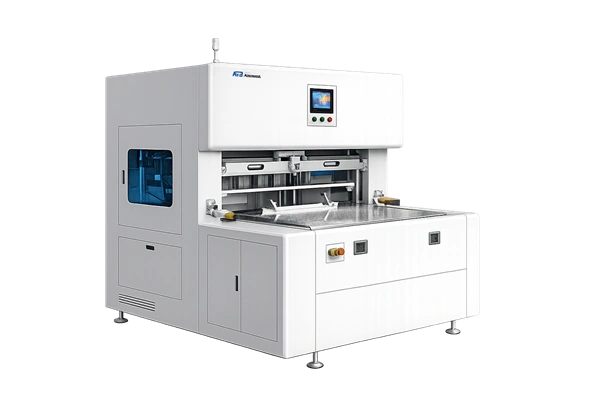
| Core Competency | waste removal |
| Suitable Scenario | Packaging |
| Minimum Product Size | 35X35mm |
| Waste Removal Speed | 1-5 times/min |



 English
 Español