The afternoon shift at a folding carton plant in Ohio ground to a halt. A rush order for 50,000 pharmaceutical inserts sat stacked on pallets, die-cut and ready — except for one problem. Between every blister pack outline, tiny ladders of scrap paper clung stubbornly, and the team of three operators couldn’t strip it fast enough. Two shifts, aching fingers, and 4% product damage later, the production manager knew there had to be a better way.
That scene repeats daily in thousands of printing and packaging shops worldwide. Waste removal after die cutting is often treated as an afterthought, yet it’s one of the most labor-intensive, cost-draining steps in the entire finishing workflow. Whether you’re producing folding cartons, labels, corrugated displays, or flexible packaging, understanding die-cut waste removal — and how to automate it — can transform your throughput. This guide will walk you through what it is, why it’s so challenging, and how modern equipment can turn a bottleneck into a smooth, hands-free process. If you’re already looking for a targeted upgrade, you can explore automated sheet-fed stripping technology designed precisely for these demands.
After a sheet goes through a flatbed or rotary die cutter, it doesn’t magically become finished product. The die scores and cuts the desired shapes, but surrounding scrap — what the industry calls “waste,” “chad,” or “windowing material” — remains attached by tiny nicks or uncut edges. Die-cut waste removal is the process of separating that unwanted material from the die-cut sheets. It’s the bridge between cutting and final stacking, and when it fails, everything downstream suffers.
Traditionally, it’s done one of two ways: manually, with operators using picks, air nozzles, or simple stripping frames, or semi-automatically, with inline stripping stations attached to the die cutter. Manual stripping relies entirely on human dexterity. Semi-automatic solutions use pins or grippers to push out larger waste areas, but often leave intricate internal scrap behind. In both cases, the process is rarely perfect, and the next step — separating individual blanks from the sheet grid — is often an even bigger headache.
If you step onto a typical finishing floor, you’ll notice three things quickly: noise from the die cutter, stacks of semi-finished sheets, and people. Lots of people, hunched over tables, pulling at paper and board. The root cause isn’t a lack of skill; it’s the physics of waste adhesion and the variability of materials.
Cardboard, paperboard, plastic films, and corrugated each behave differently under tension. Environmental factors like humidity change how easily scrap breaks away. Narrow internal webs — the thin strips between two windows on a carton — can tear if you breathe wrong. Couple that with the speed of modern die cutters (some running 10,000 sheets per hour or more), and manual stripping becomes a nearly impossible task to scale. Industry data from the Printing Industries of America indicates that manual stripping and blanking can consume up to 20–30% of total make-ready and production time in folding carton jobs, with scrap-related downtime being a leading cause of missed delivery deadlines.
That’s not just a labor problem — it’s an accuracy problem. Hand stripping often leaves hanging fibers or slight tears, leading to jams in automatic folder-gluers. Bent corners or nicked edges from aggressive manual tools downgrade quality. And ergonomic injuries, from repetitive wrist movements and prolonged standing, contribute to operator turnover. The real cost of ignoring waste removal automation hides in rework, overtime, and customer rejections.
Ask a finishing specialist about the biggest leap forward, and they’ll likely point to the integration of automated stripping and blanking units right after the die cutter. Unlike traditional pin stripping, these systems handle not just the big scrap but also the fine internal grids, separating every single blank from the sheet and delivering neatly stacked product — without human fingers touching the material.
At the heart of this approach is what some call a full page blanking machine. In a typical inline configuration, the die-cut sheet is fed directly into a station equipped with a grid of stripping tools and a counter-pressure plate. Pins, combs, or specially shaped tools press precisely where the waste lanes are located, ejecting scrap cleanly while holding the blanks in position. Immediately after, a blanking frame pushes the finished pieces out of the sheet skeleton onto a delivery pile. The empty skeleton continues on to a scrap conveyor. The entire cycle takes a fraction of a second per sheet, synchronized to the die cutter’s pace.
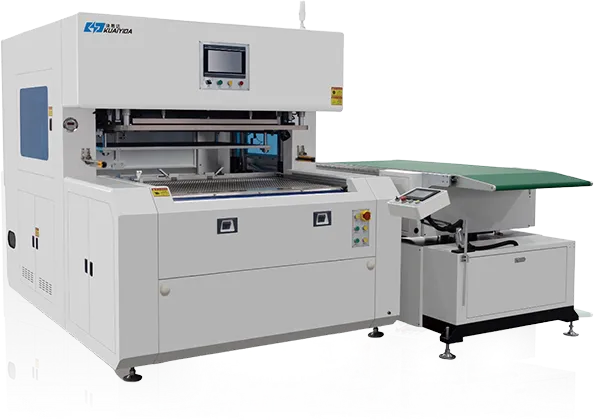
Crucial for print finishing teams is that these systems work with both flatbed and rotary die cutters, and can handle an immense range of materials: from lightweight 80 gsm paper to heavy double-wall corrugated board. Quick-change tooling frames allow job changeovers in under 15 minutes, making them feasible even for shops that run multiple short-run jobs per day.
Not every automated solution fits every plant. Before requesting quotes, evaluate these four parameters honestly:
Sheet size and layout: Are you running a dedicated sheet size or a mix? Multi-size compatibility usually requires adjustable tooling frames.
Material spectrum: Will you process only paperboard, or also plastics, micro-flute, and metallized substrates? The gripping and stripping force required changes significantly.
Waste complexity: Count the number of internal waste areas in your most complicated job. Fine grids demand a high density of stripping pins.
Inline vs. near-line: An inline unit directly coupled to the die cutter delivers the highest throughput, but near-line configurations can serve two cutters alternately in high-mix environments.
For many converters, a dedicated blanking system that handles both stripping and blank separation in one pass becomes the sweet spot. To understand how different specifications translate into real-world output, you can compare sheet-fed blanking system specs and integration options.
Automation doesn’t mean “set and forget.” A few operational habits separate high-yield lines from constant-tweaking hell:
Optimize die design for stripping. Before the cutter even runs, work with your die maker to include properly placed nicks and waste ejection channels. A well-designed die reduces stripping force requirements by up to 30%.
Maintain clean, calibrated tools. Pins and blanking frames wear over time. A quarterly inspection and replacement routine keeps scrap ejection sharp and prevents “hanging” pieces that lead to jams.
Control sheet moisture content. Excess moisture makes waste tear rather than punch cleanly. Maintain the pressroom at 50±5% RH and store stock properly.
Use micro-adjustment capabilities. Modern blanking stations allow fine-tuning of pin depth and timing from the operator panel. Use these to dial in settings per job, rather than settling for a “close enough” global preset.
Train operators on quick-change tooling. Even a brilliant blanking system can cause headaches if the crew takes 45 minutes to change a frame. Invest in training and standardized cart setups.
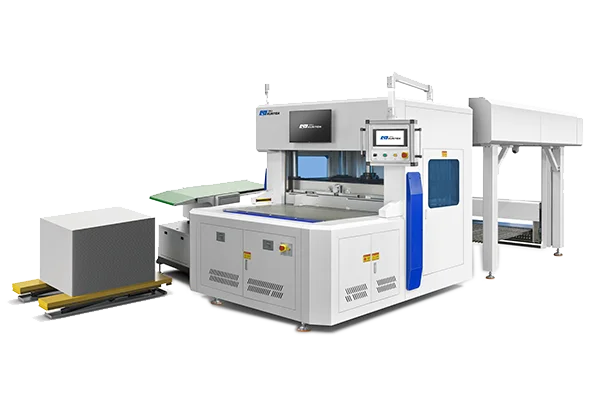
Following these practices, several mid-size carton converters have reported slashing manual stripping labor by more than 80% and boosting folder-gluer uptime by double digits — simply because blanks emerge uniformly flat and scrap-free.
The journey from manual waste removal to a fully automated workflow doesn’t have to happen overnight. Many shops start by automating the most labor-intensive job lines first, then retrofitting additional capacity as ROI materializes. The key is to treat waste removal not as a necessary evil, but as an engineered process with its own set of optimization levers.
If you’re tired of production delays caused by scrap, or if you’re planning a capacity expansion and want to future-proof your finishing department, it’s worth taking a close look at integrated blanking solutions. Kuaiyida offers a range of equipment that pairs directly with the world’s leading die cutter brands, with a focus on quick changeover and reliable, fine-grid scrap removal. For a deeper dive into technical specs, real throughput figures, and integration diagrams, visit the Kuaiyida blanking solutions page. There you’ll find detailed layout examples and can request a custom assessment for your specific sheet sizes and job profiles.
Automated waste removal isn’t just about removing scrap — it’s about reclaiming your production hours, your floor space, and your team’s focus for the work that actually grows your business.
Disclaimer: This article is for informational purposes only. Equipment performance varies based on material characteristics, job configurations, and operating conditions. Always consult with a qualified equipment supplier for specifications and feasibility studies tailored to your operation.
Free one-year warranty.
24/7 technical support.
Efficient supply of original spare parts.


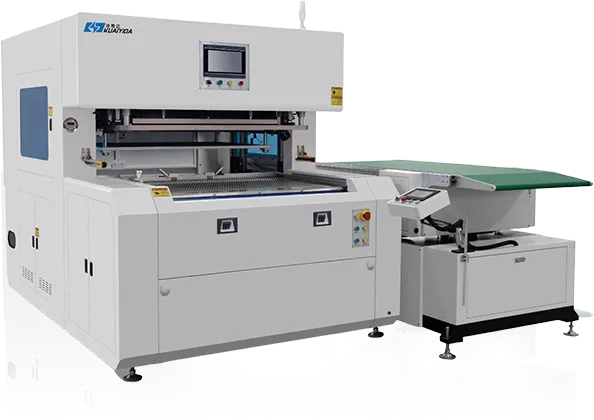
|
Core Competency |
Manual feeding + automatic waste removal |
|
Suitable Scenario |
Irregularly shaped products |
|
Minimum Product Size |
35X35mm |
|
Waste Removal Speed |
1-5 times/min |
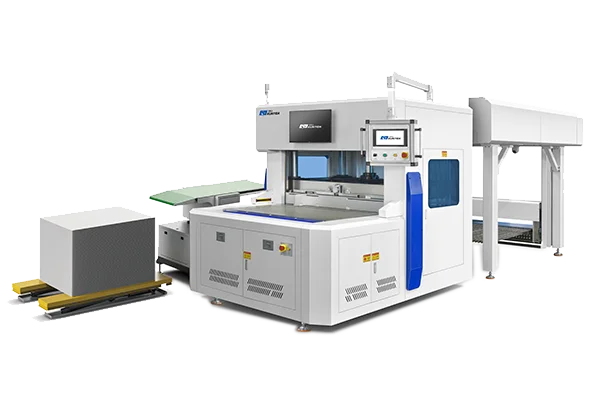
| Core Competency | Auto Collection |
| Suitable Scenario | Packaging |
| Minimum Product Size | 100*80mm |
| Waste Removal Speed | 2-3 times/min |

| Core Competency | Economical waste disposal solutions |
| Suitable Scenario | Basic packaging box |
| Minimum Product Size | 35X35mm |
| Waste Removal Speed | 1-5 times/min |
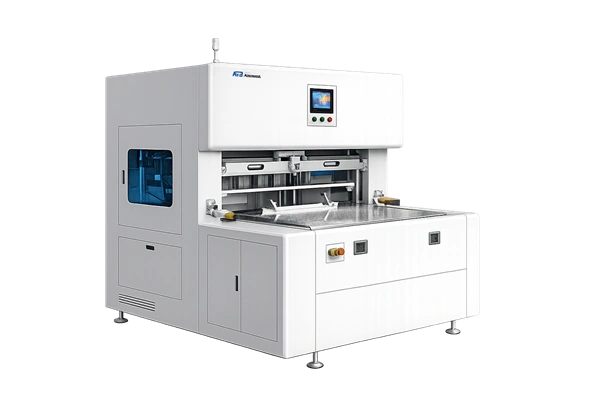
| Core Competency | waste removal |
| Suitable Scenario | Packaging |
| Minimum Product Size | 35X35mm |
| Waste Removal Speed | 1-5 times/min |



 English
 Español