There’s a quiet panic that runs through the morning shift when the wash line stutters. A tangle of multi-laminate film has wrapped the shredder rotor for the third time this week. Downstream, the friction washer is vibrating more than it should, and the quality lab just flagged a batch for “excessive organic residue.” The line supervisor rubs the back of his neck and mutters the same thing he did last month: “There’s got to be a better way to open this stuff up before it hits the wet section.”
If you’ve spent any time in a post-consumer recycled (PCR) plastic plant, you’ve probably felt that tension yourself. The industry has thrown an enormous amount of innovation at sorting—NIR, hyperspectral, flotation tanks—but the step that sits between the baled feedstock and the hot wash is still largely owned by conventional granulators and shredded metal blades. It works, until it doesn’t. And when it doesn’t, you pay with unplanned downtime, blade changes, and a wash line that never quite hits its nameplate capacity.
Post-consumer plastic arrives at a recycling facility in a wildly unpredictable state. Milk bottles are crushed against PET trays, shrink wrap clings to HDPE jerrycans, and someone’s takeaway container still holds a dried layer of curry. The first contact this chaos has with a machine is usually a high-speed rotor that is expected to “liberate” contaminants by reducing everything into palm-sized flakes.
That approach does release some dirt, but it creates two silent drains on the downstream operation. First, random flake geometry: when a shear blade smashes a rigid detergent bottle, it produces a broad distribution of particle sizes—long splinters, dust, and chunky fragments. These inconsistent shapes disrupt the hydraulic dynamics in a sink-float tank, allowing slim pieces to surf the surface and carry organics straight into the clean stream. Second, unopened folds: film and flexible packaging are notorious for staying partially wrapped even after a pass through a traditional shredder. Caustic solution and hot water simply can’t reach the inner layers of a folded sachet.
According to a 2023 benchmark report by the Plastics Recyclers Europe technical committee, improper particle morphology accounts for approximately 12–18 % of residual contamination in rigid PCR streams even after a thermal wash. That’s not a sorting problem—it’s a shape problem.
A granulator’s primary job is to downsize. It wasn’t born in a recycling plant; it was born in a manufacturing floor, where clean, homogeneous sprues and runners are reground. Transfer that same knife-chop logic to mixed post-consumer waste, and you’ve forced a cutting tool to act as a cleaning tool. The mismatch shows up in three operational costs:
Consumable spend: Blades dull quickly against grit, metal fragments, and multi-layer barriers. A mid-size PCR line might cycle through a set of rotor and bed knives every 60–80 tonnes—often more if the input contains PET with heavy mineral filler.
Energy overhead: Granulating film under compression generates frictional heat, softening LDPE and smearing it across screens, which then reduces throughput until the next clean-out.
Maintenance concentration: Every unexpected blockage steals labour hours that could be spent on the bottle sorting deck or the optical sorters, where human attention delivers higher marginal value.
These are not uncommon observations. An operations manager at a major German recycling compounder recently shared that their mechanical availability on the pre-wash side improved by 22 % merely by relocating the knife-based cutting step to later in the process and introducing a different first-stage opening system. That rearrangement didn’t require a new building—just a different philosophy about when to cut and when to simply open.
Instead of reducing the plastic immediately through shear, certain recycling lines are moving toward a concept borrowed from the paper pulping world but adapted for polymer toughness: stamping a controlled pattern of apertures across the entire sheet or container body, without fully fragmenting it. The idea is to transform a rigid bottle or a folded film into a lattice-like structure that water, detergent, and friction can pass through easily. The stamping action also flexes the material, cracking dried-on contaminants mechanically before they ever meet hot water.
This process relies on a specialised module that guides the material between a rotating drum and a counter-pressure assembly. As each piece passes the nip, tooled inserts perforate the surface at predictable intervals. Because the machine doesn’t rely on sharp edges that demand a precise clearance gap, it tolerates abrasive contaminants far more gracefully than a high-speed granulator. Operators report that wear components in such modules are typically lasting over 300 tonnes before any measurable loss in perforation quality.
The downstream effect is immediate. In a sink-float tank, water penetrates every layer. Labels detach more cleanly because the adhesive bond is broken mechanically along the perforations. In the hot friction washer, the perforated matrix creates smaller, more uniform aggregates that churn evenly, giving the caustic solution full access to organic residues. The result is a flake that enters the dryer with 2–4 percentage points less ash content, measured by thermogravimetric analysis, compared to flakes from an unperforated, directly granulated stream. That shift can mean the difference between a pellet that meets food-contact requirements and one that is downgraded to non-critical applications.
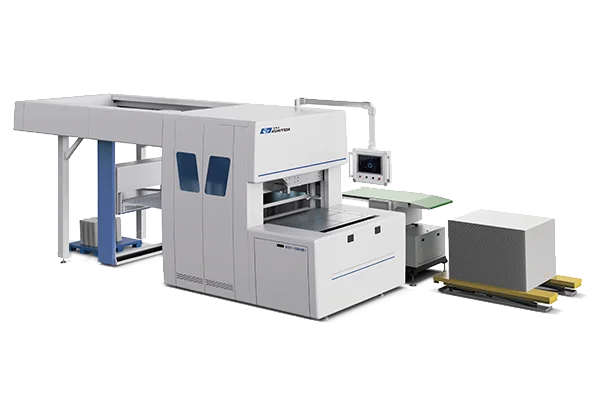
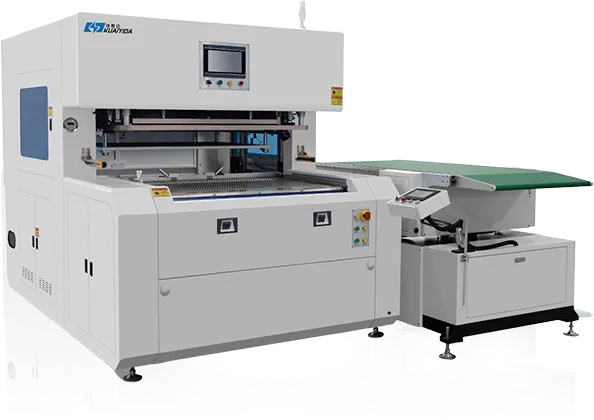
For those wanting to evaluate the practical specs of such a system in an industrial context, you can review the technical parameters of Kyd’s integrated perforation module. Its design targets the exact pre-wash opening stage described above, with a focus on accommodating both rigid and flexible feedstocks without constant blade adjustment.
No two recycling lines are identical, but the pattern of improvement becomes visible when you isolate the unit operation responsible for “opening.” A PET bottle-to-bottle plant in Southeast Asia commissioned a new pre-wash section in early 2025 that placed a perforation stage ahead of the wet granulator. Before the change, hot wash residue averaged 1.8 % by weight on the clean flake output. Within four weeks of continuous operation, average residue dropped to 0.7 %, and the variation between batches narrowed considerably—something the quality manager attributed to the more predictable particle geometry reaching the sink-float bath.
In a separate case, a European mixed-polyolefin recycling operation focused on film found that they could reduce the caustic soda dosing rate by almost 15 % while maintaining the same post-wash pH neutralisation performance. The reason was straightforward: because the film was already physically expanded at the surface, less chemical energy was required to detach adhesives and paper labels. Chemically, that translates into a gentler downstream effluent that is easier to treat and discharge under tight local environmental permits.
These examples are not isolated engineering miracles. They reflect a broader industry shift toward mechanical pre-treatment that respects the thermal and chemical steps that follow it. The key insight is that cleaning begins not at the hot washer, but at the very first mechanical interaction the material experiences.
If you’re considering moving away from a granulator-first layout, there are a few real-world checks that will save a lot of commissioning headaches:
Feedstock mix ratio: Know your rigid-to-flexible ratio. Perforation drum geometry that works well for 60 % rigid / 40 % film may stall if the input swings above 70 % film without a larger drum diameter. Measure it over two weeks, not two hours.
Abrasive load: Run an ash test on a representative 5 kg bale sample. If ash exceeds 8 % by weight, factor in more frequent inspection of the stamping tool segments—not because they’ll fail, but because they’ll influence pattern uniformity over time.
Downstream sieve logic: Once you start producing a more open, lattice-like material, your existing granulator screen size may become a bottleneck. Many operators end up opening the screen diameter by 2–3 mm without affecting final flake quality, simply because the perforation step already defines the effective particle behaviour.
Water flow geometry: A perforator increases the surface area exposed to water almost instantly. That means your first rinse stage might need a slight increase in flow rate to carry away the liberated dirt. A 10–15 % bump in circulation is typical and well within pump margins.
The industry has matured past the time when a single giant shredder was the default front-end for all plastic waste. In its place, a more considered sequence is emerging: open first, then cut, then wash. It’s a small shift in vocabulary, but a significant shift in operational stability and flake consistency.
If your line is already producing reasonable output, the thought of disrupting a running process can feel risky. But the cost of invisible inefficiency—blade changes every ten shifts, fluctuating lab results, caustic overconsumption—often exceeds the capital of a targeted pre-treatment upgrade within 18 months. The difference is that these costs don’t appear as a single line item; they are scattered across maintenance, chemical purchases, and quality downgrades that erode the selling price quietly.
For teams that want to explore how a dedicated stamping and perforation front-end fits into their existing layout without a full line rebuild, you can access Kyd’s application guide and layout configurator here. The resource focuses on the integration footprint and material compatibility so you can assess feasibility against your specific bale composition.
At the end of the day, post-consumer plastic cleaning is as much a physical chemistry challenge as it is a logistics one. When you give water and chemistry a properly opened surface to work on, everything downstream relaxes a little. The morning shift can stop worrying about the shredder rotor, and start paying attention to the parts of the plant that actually add value: the sorters, the extruder, and the quality of the pellet leaving the gate.
Free one-year warranty.
24/7 technical support.
Efficient supply of original spare parts.


|
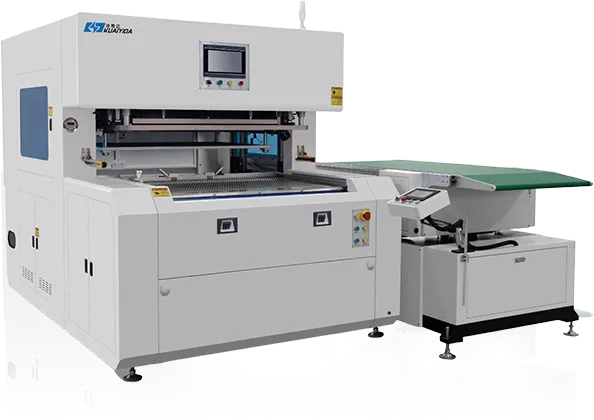
Core Competency |
Manual feeding + automatic waste removal |
|
Suitable Scenario |
Irregularly shaped products |
|
Minimum Product Size |
35X35mm |
|
Waste Removal Speed |
1-5 times/min |
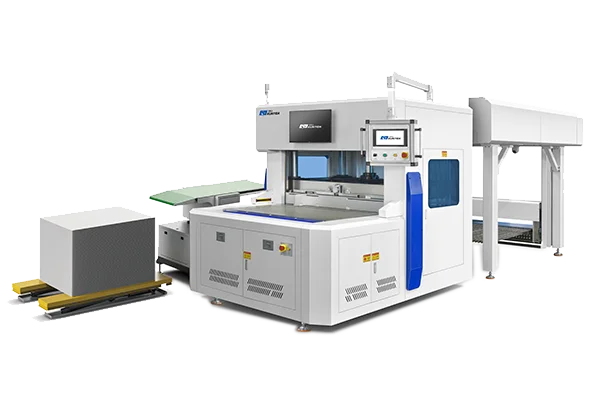
| Core Competency | Auto Collection |
| Suitable Scenario | Packaging |
| Minimum Product Size | 100*80mm |
| Waste Removal Speed | 2-3 times/min |

| Core Competency | Economical waste disposal solutions |
| Suitable Scenario | Basic packaging box |
| Minimum Product Size | 35X35mm |
| Waste Removal Speed | 1-5 times/min |
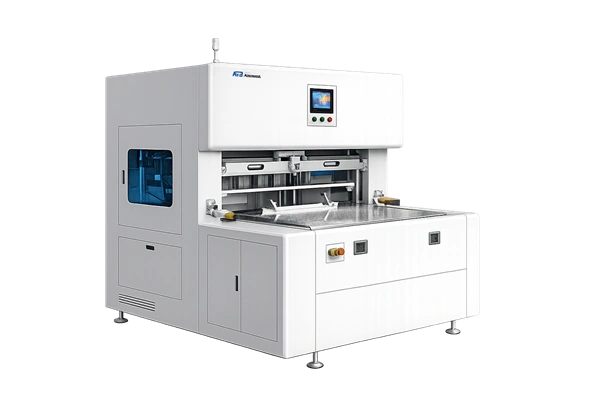
| Core Competency | waste removal |
| Suitable Scenario | Packaging |
| Minimum Product Size | 35X35mm |
| Waste Removal Speed | 1-5 times/min |

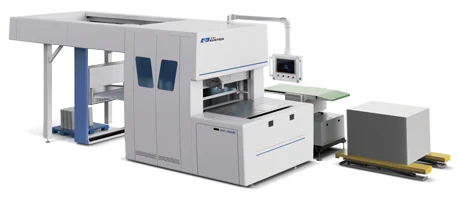


 English
 Español